
Quick Summary
- SmartRoutes is the strongest Routific alternative for growing teams, offering full delivery management on a predictable per-vehicle plan with unlimited stops and drivers.
- Spoke, OptimoRoute, Onfleet, and Route4Me each suit different needs, from courier work and complex routing to high-volume fleets.
- Routific’s free and entry tiers suit low volumes, but per-order pricing gets expensive once you move beyond a few hundred to a thousand orders per month.
- SmartRoutes, Onfleet, and Route4Me offer stronger live tracking, analytics, and territory or multi-depot tools, which makes them better for teams planning to scale.
Routific is a well-regarded route planning platform used by small and mid-sized delivery businesses. It offers clean route optimization, a straightforward driver app, and a free tier for teams handling fewer than 100 orders per month. For many businesses, it does the job well.
That said, there are real reasons teams move on. Routific's pricing model escalates quickly once order volumes grow, real-time driver tracking has historically been a weak point, and API integrations are limited compared to competing platforms. If you are weighing up your options, this guide breaks down the 8 best Routific alternatives in 2026 with current pricing and an honest look at what each tool does well.
Why Teams Look for a Routific Alternative
Before comparing tools, it helps to understand what specifically prompts the switch. The most common reasons that come up in Routific reviews include:
- Cost at scale: Routific's per-order pricing model means costs climb steeply as delivery volumes grow. The free tier covers up to 100 orders per month, but the next tier costs $150/month for up to 1,500 orders, with incremental charges beyond that.
- Live tracking limitations. Routific tracks driver progress based on the last completed stop rather than true real-time GPS location. For businesses that need live ETAs and rerouting mid-route, this is a genuine constraint.
- No territory management. Teams managing multiple zones or depots find Routific's lack of territory tools restrictive.
- Limited integrations. API and third-party integrations are thinner than those offered by platforms like SmartRoutes or OptimoRoute.
SmartRoutes Route Planning Software
Streamline your entire delivery process, all from one platform

The 8 Best Routific Alternatives
1. SmartRoutes: Best Overall Routific Alternative
SmartRoutes is a full-service delivery management platform built for businesses of all sizes. Users praise how quickly it cuts planning time, improves visibility on every driver, and reduces failed deliveries thanks to better notifications and proof of delivery.
It covers route planning, driver dispatch, real-time tracking, proof of delivery, and customer notifications from a single platform. Routes can factor in time windows, vehicle capacity, zones, and multi-depot setups, and planners can see every vehicle on a live map while routes are in progress. The driver app lets drivers follow optimized routes, capture photos, signatures, and barcode scans, and send that proof straight back to the office.
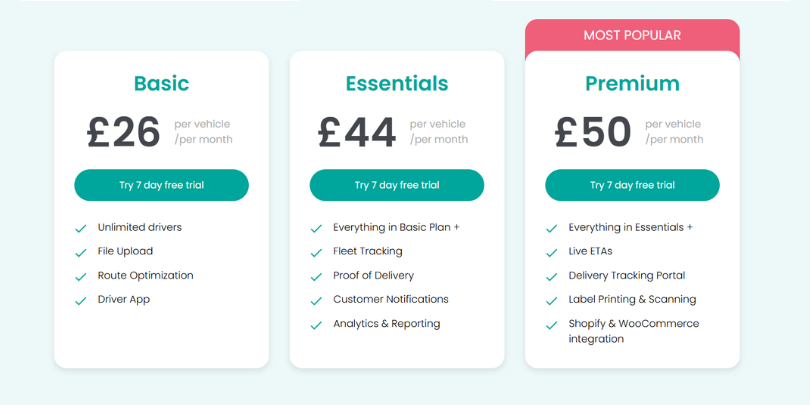
Where SmartRoutes stands out against Routific is in its pricing structure. Rather than charging per order, SmartRoutes uses a per-vehicle model with unlimited drivers, so costs stay predictable as delivery volume grows.
Key features:
- Multi-stop route optimization with time windows, vehicle capacity, and priority stops
- Real-time GPS driver tracking and live ETA updates on a shared map
- Proof of delivery with photo capture, signatures, and geo-stamped confirmation stored per stop
- Automated customer notifications via SMS and email, including live tracking links
- Native integrations with Shopify and WooCommerce for automatic order import
- Driver mobile app for iOS and Android, including navigation and barcode scanning
SmartRoutes pricing: entry plans start from €29 per vehicle per month on a subscription model, with a free trial so teams can test it on live routes before switching from Routific.
Best for: small and mid-sized delivery businesses that want Routific’s feature set with a predictable per-vehicle cost.
2. Spoke (formerly Circuit): Best for Fast Setup and Courier Teams
Spoke (formerly Circuit) is a route planner that drivers genuinely like using, with reviews describing it as easy to use, flexible, and a big help in finishing routes earlier. Teams that switch from manual planning or basic navigation apps often mention how quickly drivers pick it up and how much faster they can get through multi-stop routes once Spoke optimizes the sequence.
Spoke is focused on speed and simplicity. Dispatchers or drivers can import stops from a spreadsheet or add them manually, then let Spoke calculate the most efficient route while respecting delivery time windows. The mobile app gives drivers a clear stop list with turn-by-turn navigation, plus tools to add notes, mark stops as complete, and adjust the route order on the fly if something changes during the day. A separate dispatch dashboard in Spoke Dispatch lets managers track drivers in real time, see ETAs, and reassign stops if a driver runs into delays.
Key features:
- Fast import of stops via spreadsheet or manual entry, with route optimization that respects time windows
- Mobile app for drivers with turn-by-turn navigation and easy stop reordering during the day
- Real-time driver tracking and ETAs in the dispatcher dashboard, with simple route reassignment tools
- Basic delivery management features including notes per stop and route history
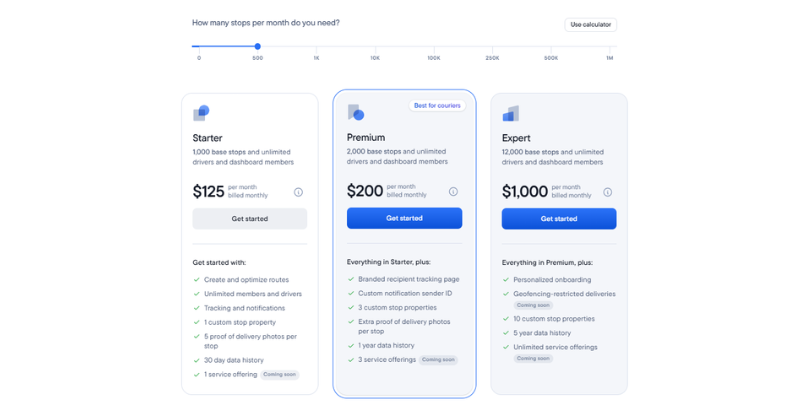
Spoke pricing: plans start from $$125 per month for smaller teams, with stop-based limits that scale for higher volumes.
Best for: courier and delivery teams that want a route planner that is quick to set up, easy for drivers to use, and strong on time-window deliveries.
3. OptimoRoute: Best for Data‑Driven Scheduling
OptimoRoute is a favorite with operations teams that care about data and scheduling accuracy. Reviews often mention big time savings in planning, with some users reporting up to an 80% reduction in planning time and the ability to complete more deliveries each week without adding extra vehicles.
OptimoRoute is built for complex routing rather than simple “fastest route” planning. It supports multi-day and recurring routes, detailed time windows, visit frequency rules, driver skills, and vehicle capacity limits so planners can match routes to strict service level agreements. The driver app gives live updates from the field, with proof of delivery options and real-time tracking so managers can see where every driver is and whether routes are on schedule. Detailed reports cover route performance, driver hours, distances, and on-time rates, which suits teams that want to measure and optimize delivery KPIs over time.
Key features:
- Advanced multi-stop route optimization with service time, skills, and visit frequency rules
- Support for recurring and multi-day routes for regular customers or field service work
- Driver app with live updates and proof of delivery options
- Real-time driver tracking and performance reports on distance, time, and on-time delivery
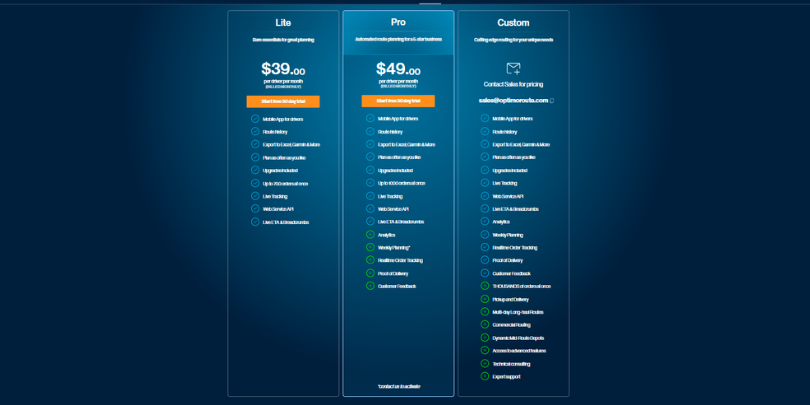
OptimoRoute pricing: entry plans start from $39 per driver per month on a subscription model, with a 30-day free trial available.
Best for: small and mid-sized teams that want per-driver pricing and strong control over scheduling, constraints, and analytics rather than just basic route planning.
4. Onfleet: Best for High‑Volume Operations
Onfleet is one of the most popular last mile delivery platforms for high‑volume fleets with frequent praise for its real-time tracking and ease of use. Reviews highlight how it gives dispatchers a clear live view of every task and driver, and how automated notifications and ETAs improve customer satisfaction on busy delivery days.
Onfleet is built around a powerful dispatcher dashboard and driver app. Dispatchers can auto-assign tasks, build multi-vehicle routes with time windows and capacity limits, and watch live progress as drivers work through their queues. The driver app supports turn-by-turn navigation, in-app chat, and robust proof of delivery with photos, signatures, and barcode scans, which is important for regulated or high-value deliveries. Customers receive automated SMS or email updates with live tracking links and accurate ETAs, which reduces missed deliveries and “where is my order?” calls.
Analytics are a strong point. Onfleet tracks task volumes, delivery times, and on-time performance, and offers an API-first integration approach so larger teams can plug it into ecommerce, POS, or order management systems. This combination of automation, tracking, and reporting is why it tends to be chosen by grocery, parcel, and enterprise retail fleets rather than very small teams.
Key features:
- Advanced route planning and auto-dispatch for multiple vehicles with time windows and capacity limits
- Real-time driver tracking and in-app driver–dispatcher communication
- Proof of delivery with photos, signatures, and barcode scanning stored per task
- Automated SMS and email notifications with live tracking pages and ETAs for customers
- Analytics and API integrations for eCommerce, POS, and back-office systems
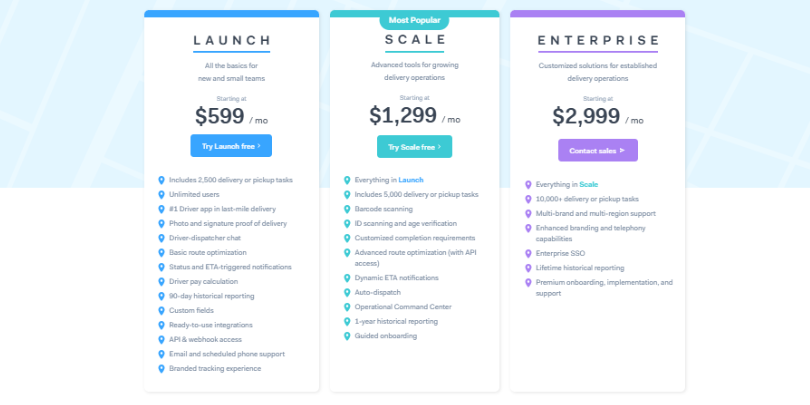
Onfleet pricing: paid plans start from $599 per month for up to 2,500 tasks, with a 14-day free trial available.
Best for: large delivery operations that handle thousands of tasks per month and need enterprise-grade tracking, notifications, and analytics rather than a simple route planner.
5. Tookan: Best for Highly Custom Workflows
Tookan is a delivery management platform that appeals to teams who want to tailor their workflows, with reviewers often praising its flexibility and the way it centralizes dispatch, tracking, and customer updates in one place. Users like that it can adapt to a range of business models, from on-demand couriers to field services, and that drivers, jobs, and routes can all be managed from a single dashboard.
Tookan provides route planning, task assignment, and a driver app where drivers see their tasks, launch navigation, and capture proof of delivery. Real-time GPS tracking lets managers follow progress on a live map and react when delays occur, while customers can receive basic status updates so they know when to expect a delivery. A key strength is its modular design: teams can add extensions for extra analytics, predictive reporting, or more advanced routing as needed, instead of running a fixed feature bundle.
Key features:
- Centralized task and delivery management with dispatch dashboard and driver app
- Route planning and live delivery tracking with GPS location updates
- Proof of delivery with photos, signatures, and other evidence captured in the driver app
- Extension marketplace and integrations for advanced analytics, predictive reporting, and other functions
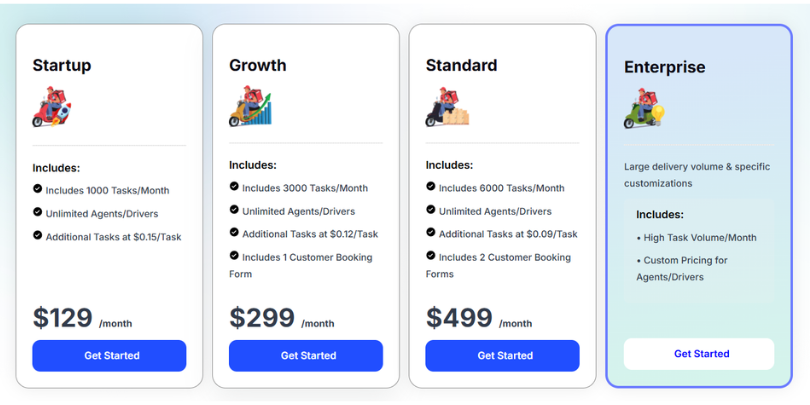
Tookan pricing: entry plans start at $129 per month on subscription, with higher tiers mainly increasing monthly task allowances.
Best for: small to mid-sized delivery or service teams that want a configurable dispatch and tracking tool and are comfortable managing add-ons and integrations to match their workflow.
6. Route4Me: Best for Complex Multi‑Route Fleets
Route4Me is one of the most established names in route planning and reviews credit it with making large, complex routing tasks much easier to handle. Users often say it saves significant planning time and that once it is set up, it becomes a daily tool for managing big stop lists across multiple drivers.
It is designed for operations that handle complex multi-stop routes, such as regional distribution, dense urban runs, or multi-day field service schedules. Route4Me can optimize thousands of stops across multiple vehicles, supports territories, multiple depots, and advanced constraints like service times and vehicle capacities, and offers driver apps with navigation and status updates. An add-on marketplace lets teams bolt on truck-specific routing, detailed territory planning, and deeper integrations, which is helpful for enterprises that want to tailor the platform.
Key features:
- Multi-route and multi-driver optimization for large stop lists across several vehicles
- Support for territories, multiple depots, service times, and capacity constraints
- Driver apps with navigation, status updates, and proof of delivery options
- Add-ons for industry-specific workflows, truck routing, and deeper integrations
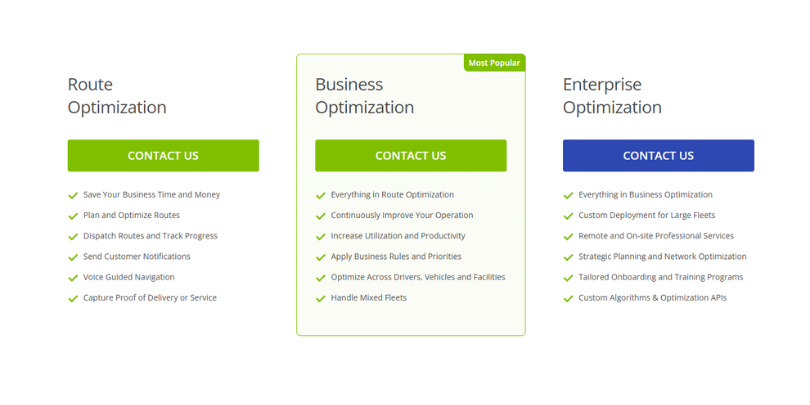
Route4Me pricing: no public pricing available, must be requested on their site.
Best for: larger fleets and enterprises running complex, multi-region or multi-depot routing who need territory tools and are comfortable managing modular pricing and add-ons.
7. RoadWarrior: Best Budget Option for Small Teams
RoadWarrior is a well-established route planner that small delivery businesses and owner-drivers tend to like for its simplicity and value, with reviews often noting that it saves time versus planning routes by hand and is easy to learn. Drivers praise the mobile app in particular, saying it helps them get through 80–100 stops a day more efficiently and does not require much training.
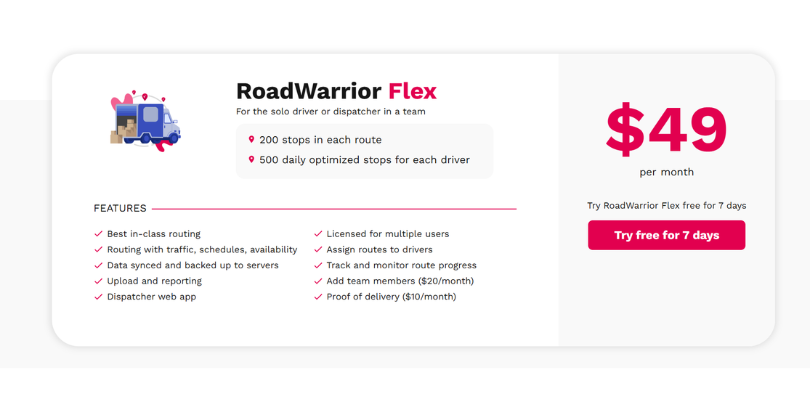
The app focuses on core route optimization rather than full delivery management. It lets users import or add stops, optimize the order for up to 200 stops per route and 500 optimized stops per driver per day, and then follow the plan using their preferred navigation app. A simple dispatcher web interface allows a manager to create routes, assign them to drivers, and track basic progress in real time. Proof of delivery is available as an optional add-on, so teams that need photos or signatures can pay extra to enable it.
The trade-off is that RoadWarrior does not include some of the delivery-specific features that larger platforms bundle, such as built-in customer notifications or deep integrations with eCommerce platforms.
Key features:
- Multi-stop route optimization for up to 200 stops per route and 500 optimized stops per driver per day
- Mobile app focused on driver experience, with real-time updates and support for external navigation apps
- Dispatcher web app for creating routes, assigning them to drivers, and tracking progress
- Optional proof of delivery add-on for photos and signatures when needed
RoadWarrior pricing: plans start from $49 per driver per month, with proof of delivery available as a separate $10 per driver per month add-on and a 7-day free trial.
Best for: solo drivers and small dispatch teams in the US and similar markets that want affordable, straightforward route optimization without needing full customer communication and integration features.
8. Zeo Route Planner: Best for Simple, Low‑Cost Routing
Zeo Route Planner is popular with individual drivers and very small teams who want something simple and low-cost, with reviews frequently praising how easy it is to set up routes and how much fuel and time it saves on everyday delivery rounds. Users like that it runs on both iOS and Android, offers several ways to add stops (typing, voice, pin drop, spreadsheet import, QR or barcode scan), and works smoothly with navigation apps such as Google Maps, Waze, and Apple Maps.
Zeo focuses on straightforward route optimization rather than full delivery management. Drivers can add up to hundreds of stops, let Zeo calculate an efficient sequence, and then follow the route while updating progress on the app. Fleet-focused plans add real-time tracking, delivery tracking, and basic dispatch tools so small teams can see where drivers are and view route reports with timestamps and proof of delivery when enabled. The platform is best suited to workloads where basic optimization and visibility are enough and advanced constraints like complex time windows or deep ecommerce integrations are not required.
Key features:
- Multi-stop route optimization with simple, driver-friendly mobile apps on iOS and Android
- Multiple ways to add stops, including typed addresses, map pins, spreadsheets, image capture, and QR or barcode scans
- Real-time tracking, delivery tracking, and simple fleet dashboards on higher plans
- Route reports with timestamps and optional proof of delivery data exportable to Excel or PDF
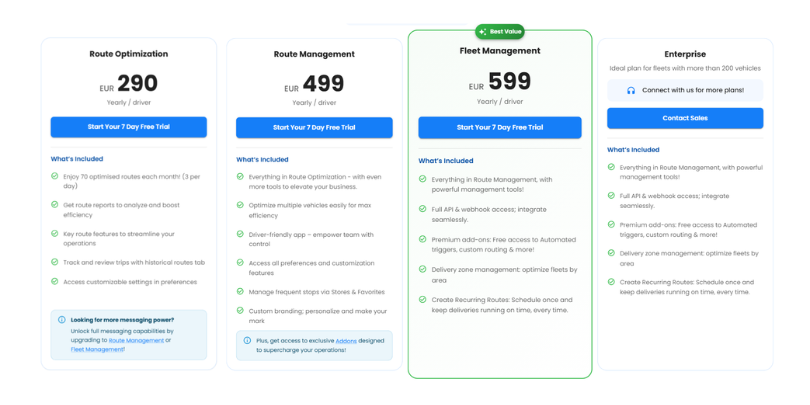
Zeo pricing: plans start at €87 per quarter, with a free app tier available for very small or trial use.
Best for: individual drivers and very small fleets that want an affordable, easy-to-use route planning app with basic tracking, and do not need the full feature set of larger delivery management platforms.
How SmartRoutes Compares to Routific
SmartRoutes and Routific cover similar basics: multi-stop route planning, driver apps, proof of delivery, and customer notifications, but they scale very differently. Routific’s free tier works well up to 100 orders a month, after which its per-order pricing climbs as volumes grow, while SmartRoutes uses a simple per-vehicle subscription with unlimited drivers and stops so costs stay predictable as you add more routes.
SmartRoutes also leans further into full delivery management, with stronger live tracking, reporting, and ecommerce integrations, and it holds an average rating of about 4.8 out of 5 on review sites for ease of use and support. For small teams testing the waters, Routific’s free tier is attractive; for growing fleets that need more control and clear pricing, SmartRoutes is usually the better long-term fit.
Want to see the difference for your own routes? Start a 7 day free trial (no card needed) and run it alongside Routific.
FAQ
1. Why would I look for an alternative to Routific?
Most teams that move away from Routific mention two things: pricing and limitations as they grow. The per-order pricing model is affordable at low volumes, but costs rise quickly once you go beyond a few hundred or a thousand orders per month, especially if delivery volumes spike seasonally. Others find that they need stronger live tracking, territory tools, or deeper integrations than Routific offers out of the box, which leads them to platforms such as SmartRoutes, OptimoRoute, or Onfleet.
2. Is Routific still a good fit for small delivery teams?
Yes. For very small teams running under about 100 orders a month, the free tier offers real value because it includes route optimization, a driver app, proof of delivery, and basic email notifications at no cost. For predictable volumes up to around 1,000 orders a month, the flat $150 plan can also be cost effective, particularly when you do not need deeper reporting or territory management. If you expect your volumes or fleet size to grow, it is worth modeling what the per-order costs look like at higher volumes and comparing that with a per-vehicle or per-driver model.
3. How does SmartRoutes pricing compare to Routific?
Routific uses a pay-as-you-grow model: free for up to 100 orders per month, then $150 per month for 101–1,000 orders, with per-order fees above that. SmartRoutes charges per vehicle instead, with plans starting at about €29–32 per vehicle per month, unlimited stops, and unlimited drivers on each vehicle licence. For small teams with very low volumes, Routific can work out cheaper; once delivery volumes increase or you are running frequent routes, SmartRoutes' per-vehicle pricing tends to become more predictable and often lower overall.
4. Which Routific alternative is best for high-volume deliveries?
For fleets handling thousands of tasks per month, tools like Onfleet, Route4Me, and SmartRoutes are usually stronger contenders than Routific. Onfleet focuses on high-volume operations with rich analytics and automation, while Route4Me excels at complex multi-depot and territory routing. SmartRoutes offers full delivery management with live tracking, proof of delivery, and customer notifications on a per-vehicle model, which many growing fleets find simpler and more cost effective than per-order pricing.
5. How hard is it to switch from Routific to SmartRoutes?
Switching is straightforward for most teams. You can export your customer and order data from Routific into a spreadsheet, then import that into SmartRoutes to recreate routes with similar stops. SmartRoutes has a 7-day free trial, so you can run it in parallel with Routific, send test routes to a small group of drivers, and compare performance before committing. Most teams can go from sign-up to their first live routes in under an hour, especially with guidance from SmartRoutes support.
If you enjoyed this blog, you might also be interested in:
 Caroline Hassett
 Michael Santry