
Quick Summary
- Offering a delivery time window gives customers a clear timeframe for arrival, which reduces uncertainty and improves the overall delivery experience.
- Well-planned delivery time windows cut failed or missed deliveries by ensuring customers are available when drivers arrive.
- Using delivery time windows helps optimize routes and driver schedules, lowering fuel costs and unproductive mileage.
- Clear communication around delivery time windows, supported by ETAs and tracking links, builds trust and keeps customers informed in real time.
- Businesses that use delivery time windows for perishable, bulky, or high-value orders can protect goods, avoid spoilage, and maintain higher customer satisfaction.
It’s no secret that the demand for swift and flawlessly executed deliveries has been steadily on the rise. As the eCommerce and logistics sectors continue to evolve, so do the standards set by customers for a smooth delivery experience. A recent study revealed that a whopping 65% of shoppers are willing to pay more for faster, more reliable deliveries. This highlights the growing importance customers place on the timeliness and reliability of deliveries.
Recognizing and responding to these escalating expectations is not just a matter of staying competitive; it's a fundamental necessity for sustained business growth. Businesses that understand the need to meet or, better yet, exceed these rising customer expectations are better positioned for customer retention.
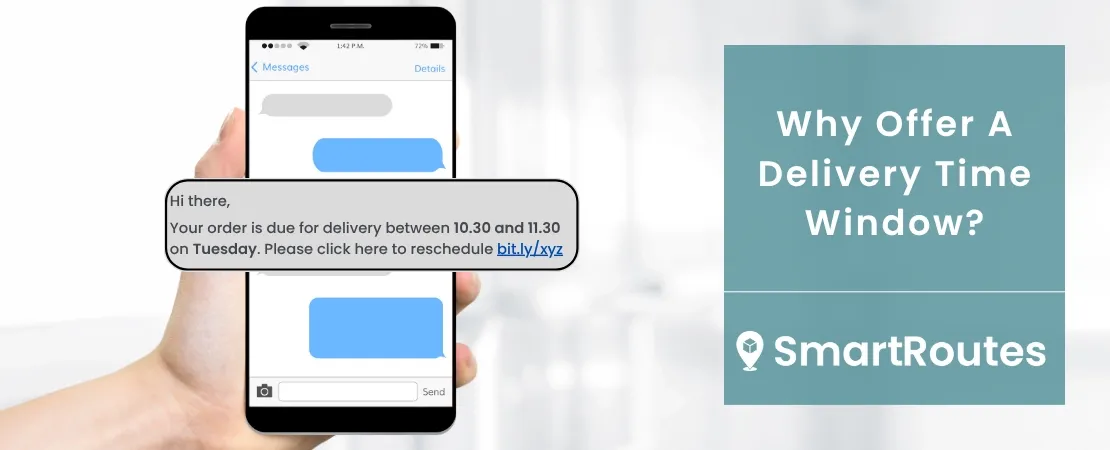
This is where offering delivery time windows comes into play. By offering a designated timeframe within which customers can anticipate the arrival of their orders, businesses can bridge the gap between consumer expectations and operational efficiency.
In the following blog, we will look at the details of delivery time windows, examining the various types, the processes involved, and the benefits they bring to businesses.
What is a Delivery Time Window?
A Delivery Time Window is essentially a designated time range during which customers can expect to receive their deliveries. This timeframe is typically chosen by the customer or determined by the business and then accepted by the customer.
Whether it's a brief window of minutes or a more extended one spanning hours, customers can rely on their delivery arriving during this designated time. This reliability increases the likelihood of them being present to accept their orders. This becomes particularly valuable when dealing with perishable items, deliveries requiring assistance for lifting into premises, or when transporting high-end or expensive goods that may necessitate proof of delivery.
SmartRoutes Route Planning Software
Streamline your entire delivery process, all from one platform

Types of Delivery Time Windows
Small Time Windows
Here, customers enjoy the flexibility of selecting a specific time slot that aligns with their preferences. It's all about offering them the convenience of choice. However, this flexibility does come with its challenges.
When customers choose time windows with significant gaps in the same area, drivers might find themselves backtracking, revisiting the same locations hours apart.
Large Time Windows
These delivery windows tend to be planned within a more extensive timeframe, often spanning around 10 business days. It's a common practice among Third-Party Logistics (3PL) providers. The primary aim here is to ensure tight organization within the fleet.
While this approach streamlines the logistics backend, it may present a downside for customers with limited choices. When customers are presented with a broader delivery window, it might not align well with their preferences for a specific delivery time.
A Mixture of the Two
This could involve allowing your customers to pick specific time slots of say 1 or 2 hours on a certain day. This approach caters to their desire for precise delivery timings, offering real convenience.
Although the customer might not know exactly what time the delivery will arrive, they will know that it will come within the allotted time. Simultaneously, behind the scenes, businesses orchestrate their drivers' schedules without unnecessary zigzagging.
Alternatively, another approach involves initially setting a time window while leaving room for customers to confirm or make changes if needed. This flexibility doesn't compromise the business's operational efficiency. This option ensures a seamless delivery while accommodating customers' evolving needs.
How to Start Offering Delivery Time Windows
Here are the steps involved in implementing delivery time windows in your business:
1. Empower Customers with Choice
Allowing customers to pick their preferred delivery timeslot is key. Whether it's a specific hour, a window of a few hours, or a broader timeframe, offering flexibility in choosing delivery times ensures customers are more likely to be available and eager to receive their orders.
2. Make use of Routing Software
Routing software takes these chosen time slots factoring in various variables such as location proximity, traffic patterns, and delivery priorities, and organizes the deliveries in the most efficient manner possible. If timeslots change, routes can be edited ahead of time or on the fly.

3. Keep Customers in the Loop
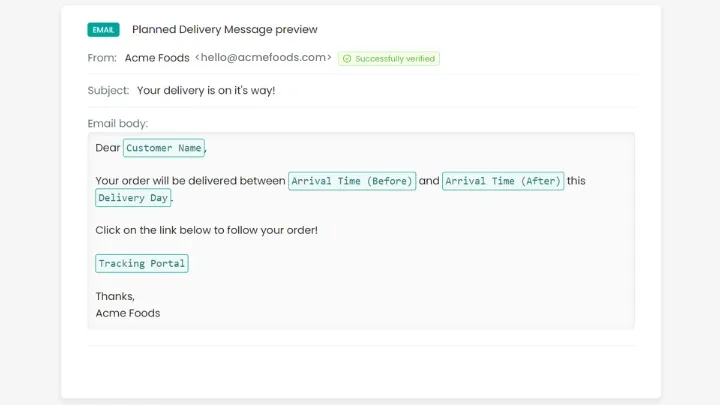
Providing Estimated Time of Arrivals (ETAs) to customers is crucial. Real-time updates about their delivery's whereabouts ensure transparency and build trust. Whether through text messages, emails, or a dedicated tracking portal, keeping customers informed is paramount. Even if a customer has booked their timeslot, it’s still important to keep them in the loop and let them know of any updates.
Benefits of offering a Delivery Time Window
1. Enhanced Customer Satisfaction
Offering a delivery time window is not just about delivering a package, it's about delivering an experience that resonates positively with the modern customer. Convenience and predictability hold immense value to your customers.
Offering customers the option to pick a timeslot for their delivery means they will be able to anticipate and prepare for their package's arrival. When customers know precisely when to expect their orders, they feel valued it will likely lead to repeat business and positive word-of-mouth referrals.
2. Efficient Handling of Perishable Goods
For businesses that handle perishable items, the use of delivery time windows proves to be an effective means of preserving product quality during transportation. When dealing with cold chain deliveries, timeliness becomes critical.
Ensuring someone is available to receive the order is equally crucial, especially if the delivery requires refrigeration upon arrival. Alerting customers about the estimated delivery time becomes essential to ensure their presence for receiving it. Delivery time windows play a pivotal role in this process.
They provide customers with a precise schedule, ensuring they are prepared to receive their orders. By narrowing the delivery window, businesses can finely coordinate deliveries, aligning them precisely with the freshness requirements of their products.
3. Streamlined Communication
Delivery time windows play a pivotal role in facilitating this smooth communication between businesses and their customers.
The provision of Estimated Time of Arrivals (ETAs) or real-time tracking updates transforms the delivery process into a transparent and interactive experience.
With ETAs or tracking updates, they're not left in the dark. They receive timely notifications about when their package is expected to arrive. This isn't merely about relaying information; it's about empowering customers, putting them in control of their delivery experience.
When customers are kept informed and engaged throughout the delivery process, it builds a sense of trust and reliability in the business.
4. Reduced Failed or Missed Deliveries
Delivery windows ensure that customers are not left guessing or waiting indefinitely for their packages to arrive. They know precisely when to expect their order, and as a result, when to be available.
Customers being present during the delivery window drastically reduces the chances of missed deliveries. This results in cost savings by mitigating the expenses associated with re-deliveries or returns due to missed deliveries.
It also enhances overall operational efficiency and customer satisfaction. Businesses can streamline their operations, focusing on delivering quality service, while customers experience a hassle-free delivery process, fostering increased satisfaction and loyalty.
5. Optimized Resource Allocation
Using delivery windows is not just about delivering a package; it's about delivering it in the most resource-efficient way possible. These windows act as the blueprint for planning routes and schedules. This precision planning ensures that routes are well organized to accommodate multiple deliveries within specific timeframes.
By condensing delivery windows, businesses minimize idle time and unnecessary mileage. This reduction in travel not only decreases fuel consumption but also reduces associated costs.
Optimized delivery schedules mean optimized workforce allocation. Businesses can plan their workforce more effectively with the delivery demands within specified timeframes. This translates to improved productivity.
Ensure Delivery Time Windows are Accurate with SmartRoutes
Businesses aiming for excellence in their delivery services can significantly raise their standards by making smart use of delivery time windows. Using delivery windows allows businesses to ensure timely deliveries and that packages arrive precisely when expected.
To achieve this level of precision and efficiency, consider using SmartRoutes, a reliable platform designed to optimize delivery processes. Easily adapt to fluctuating schedules, optimize routes on the go, and ensure that each delivery arrives within the specified window.
See how SmartRoutes can transform your delivery operations with a 7-day free trial.
FAQ
1. What is the difference between a delivery time window and an estimated time of arrival (ETA)?
A delivery time window gives customers a broader timeframe, such as “between 2pm and 4pm”, while an estimated time of arrival (ETA) provides a more specific predicted arrival time. Using both together helps customers plan their day and reduces “where is my order” queries.
2. How do delivery time windows improve last mile delivery performance?
Clear delivery time windows help last mile delivery teams group stops by location and time, which cuts unnecessary mileage and makes routes more efficient. This leads to fewer missed deliveries, lower delivery costs, and a better delivery experience for customers.
3. What industries benefit most from delivery time windows?
Delivery time windows are especially useful for grocery and food delivery, where product freshness depends on tight delivery schedules. They also help in healthcare, furniture and appliance delivery, and e‑commerce, where customers often need to be present to accept goods.
4. Can delivery time windows help increase first attempt delivery rates?
Yes. When customers can choose a delivery time window that suits them, they are more likely to be at the address when the driver arrives. This raises first attempt delivery rates and reduces the cost and effort of re-deliveries.
5. How does delivery management software support delivery time windows?
Delivery management software optimizes routes around chosen delivery time windows, traffic, and driver capacity, so schedules stay realistic. It also automates ETAs and delivery notifications, which keeps customers informed without adding extra work for your team.
If you enjoyed this blog, you might also be interested in:
 Caroline Hassett
 Michael Santry