

Quick Summary
- A medical courier service moves medications, devices, and lab samples under strict healthcare rules, not general parcels.
- New operators must lock down compliance (HIPAA, EU MDR), secure data handling, and fit vehicles with the right hygiene and temperature‑control equipment.
- Contracts usually come through tenders from hospitals, labs, and health boards, so clear SLAs, realistic per‑mile or per‑stop pricing, and a defined service scope are essential.
- Background‑checked, well‑trained drivers need a simple app that surfaces routes, delivery details, and quick ways to log delays or issues on the move.
- Delivery management and driver apps combine route optimization, live tracking, proof of delivery, and performance reporting to boost first‑attempt delivery rates and keep healthcare clients renewing.
How to start a medical courier service isn’t just a question but a high‑stakes decision that can make or break your new delivery business.
Patients, pharmacies, and hospitals are relying on you to move sensitive items on time, every time, without cutting corners on compliance or cost.
This guide shows you, step by step, how to set up a medical courier operation that wins contracts, protects patients, and uses the right delivery management software to stay profitable from day one.
What is a Medical Courier Service?
A medical courier service specializes in transporting clinical and pharmaceutical items rather than general parcels. That can include daily medication runs, delivery of medical devices to patients’ homes, and collection of blood or lab samples from multiple clinics for testing at a central facility.
Unlike a standard logistics courier, the work sits much closer to patient care. Delays, temperature issues, or mix‑ups can affect treatment plans rather than just causing inconvenience. As a result, medical courier operations are subject to stricter rules, higher documentation standards, and closer oversight from healthcare partners.
Running this type of service usually means working with regional health regulations, investing in appropriate vehicles and storage, and putting structured training in place for drivers before they ever handle medical items.
How to Start a Medical Courier Business in 5 Steps
Let's take a look at the steps involved in starting up a medical courier business:
1. Understand the rules that govern medical transport in your region
Before you buy vehicles or quote for contracts, you need a clear view of the regulations that apply to moving medical items in your country or state. Healthcare, pharmaceuticals, and lab work are all tightly controlled, and transport sits inside that same framework.
In the US, for example, HIPAA sets standards for how protected health information (PHI) is handled and stored. That affects anything from patient names on labels to how delivery records are kept. You must be able to show that your systems prevent unauthorized access to data and that staff know how to handle it correctly. SmartRoutes’ delivery management tools are designed to support secure collection and storage of this type of information.
Vehicle standards are just as important. Climate control, hygiene, and maintenance records are often specified directly in contracts. In the EU, regulations 2017/745 and 2017/746 set out requirements for the transport of many medical devices and diagnostic items. Reviewing the relevant guidance for your market will give you a clearer idea of what is required before you start trading as a medical courier.
2. Research the competitive and contract landscape
Medical courier rates can look attractive, but access to work is often controlled through formal tender processes rather than simple canvassing. Hospitals, labs, and health boards commonly use RFTs (requests for tender) that ask for detailed information on your business, certifications, procedures, and per‑mile or per‑stop pricing.
In many regions, established providers already hold multi‑year contracts, so you need to know where opportunities are likely to appear. Useful places to research demand include:
- Regional or national health boards (for upcoming RFTs and frameworks)
- Local clinics and GP practices
- Hospitals and specialist treatment centers
- Blood banks and labs
- Retirement and nursing homes
This groundwork can be done before you invest heavily in vehicles so you can match your fleet and staffing plan to real contract opportunities. It also feeds into broader decisions about what type of delivery service you want to build and which sectors you target first.

3. Equipment requirements for a medical courier service
Delivering medical items usually demands more than a basic panel van. If you are carrying medicines, samples, or devices that are sensitive to temperature or handling, you will need vehicles and equipment that meet those conditions.
Many contracts now expect temperature‑controlled storage, live GPS fleet tracking, and evidence of temperature readings from the cargo area. With SmartRoutes, clients have combined route planning, tracking, and temperature monitoring into one system that dispatchers, drivers, and customer support teams can all use. That gives every stakeholder a single view of where vehicles are, what they are carrying, and how items are being protected.
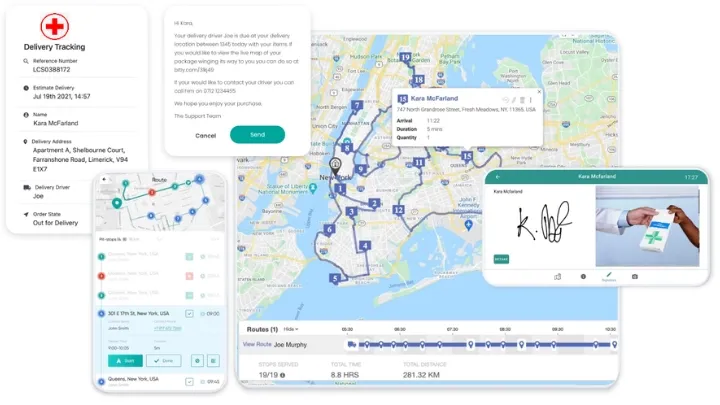
Beyond vehicles, consider insulated containers, temperature loggers, barcode scanners, and driver devices as part of your startup cost. Visibility from planning through to proof of delivery is central to winning and keeping medical courier contracts, and the right software will underpin that.
4. Vet, hire, and support your drivers
Driver quality matters even more in medical work than in general parcel delivery. Background checks, references, and any required clearances should be in place before drivers handle medical items, and training needs to cover far more than just navigation.
You are looking for a mix of driving skill and people skills. Drivers must be comfortable visiting patients at home, entering clinical sites, and following specific instructions for each delivery. Candidates with experience in pharmacy, medical devices, or healthcare can bring useful knowledge that is harder to teach than driving itself.
When Homecare Medical approached SmartRoutes, they wanted drivers to arrive prepared for every stop. Using the SmartRoutes driver app, they could see their route in advance, record delays or issues in a couple of taps, and view notes about each patient visit. That reduced confusion at the door and helped drivers give a more professional service.
Supporting drivers does not end with the app. Giving operations and customer support teams real‑time visibility on routes and ETAs means they can handle patient queries without pulling drivers into long calls on the roadside. Simple things like clear uniforms, basic welfare provisions, and fair performance rewards also help keep experienced drivers in the business.
5. Use a dedicated medical courier driver app
Technology is now essential for running a reliable, scalable medical courier service. A dedicated driver app tied to a delivery management platform can bring several key capabilities together:
- Route optimization – Build efficient routes that respect clinic opening times, patient availability, and priority deliveries, while keeping mileage and drive time under control.
- Live driver tracking – See where drivers are in real time so you can give accurate ETAs, respond to urgent requests, and spot issues before they escalate.
- Proof of delivery – Capture signatures, photos, and timestamps at the door to create a clear record for every stop and support any future queries.
For medical work, these features are as much about compliance and reassurance as they are about efficiency. With SmartRoutes, dispatchers, drivers, clients, and patients all work from the same set of live data, which makes the whole operation easier to manage and easier to explain during audits or contract reviews.
SmartRoutes Route Planning Software
Streamline your entire delivery process, all from one platform

Building Long-Term Relationships with Healthcare Clients
For hospitals, labs, and pharmacies, the best courier partners are the ones that stay steady over years, not months. Clear delivery KPIs, predictable reporting, and simple access to performance data make it easier for healthcare clients to renew contracts with confidence. Metrics like on‑time rate and first‑attempt delivery show whether patients and clinics are actually receiving items as planned.
Case Study: How Homecare Medical Used Data to Strengthen Their Partnership
Homecare Medical approached SmartRoutes after winning a nationwide contract to deliver medical devices to patients’ homes. They needed routes that would keep delivery times under control while still leaving a sensible margin on a fixed-price agreement. At the same time, they had set competitive driver pay and wanted to back it up with a workflow that felt organized and professional rather than stressful.
By rolling out SmartRoutes, Homecare Medical planned and optimized daily routes so drivers could cover large territories without unnecessary mileage. Each driver used a mobile app with clear navigation, secure access to delivery details, and simple proof-of-delivery capture at the door. This reduced time spent on admin, cut down on missed stops, and made patient interactions feel smoother.
All of this activity generated clean delivery data in the background. Homecare Medical could see on‑time delivery performance, route completion, and exception patterns in one place, and share those insights with their client during contract reviews. Instead of relying on anecdotes, they could point to real numbers that showed the service was stable, drivers were supported, and patients were receiving equipment reliably across the country.
Responsibilities of a Medical Courier Business
To keep healthcare clients confident, you need clear standards for what you transport, how you communicate, and how you prove every handover.
A good starting point is defining the scope of service you offer. That includes the types of items you carry (specimens, medications, equipment), the geographies you cover, your operating hours, and whether you support scheduled routes, on‑demand work, or both. Being specific here sets expectations early and makes it easier to quote reliably.
Service level agreements (SLAs) then turn that scope into measurable commitments. Typical SLAs for medical work cover pickup windows, maximum transit times, temperature conditions, and proof of delivery requirements. You should be able to show, at any point, how often you meet those targets and what happens when you do not.
Every specimen or package should have a clear record of who accepted it, when it moved between vehicles or depots, and when it reached the final recipient. Driver apps, barcode scanning, and time‑stamped digital signatures help you maintain this record without slowing down routes.
Healthcare teams need real‑time visibility on urgent shipments, simple ways to raise issues, and post‑delivery summaries they can trust. Sharing live tracking links, automated notifications, and concise performance reports shows that you treat every delivery as part of a larger clinical workflow, not just a stop on a route.
Regulatory and Compliance Checklist for Medical Courier Businesses
Safety and Quality Standards for Medical Deliveries
Medical deliveries sit close to clinical care, so safety and quality standards need to be clear and consistent. Strong procedures, training, and monitoring protect patients and reassure healthcare clients.
Standard operating procedures (SOPs) should cover how drivers collect, label‑check, load, protect, and hand over every item. When everyone follows the same steps, it is easier to keep standards steady and improve weak spots.
Training makes those procedures part of everyday work. Drivers need to know how to handle labelled specimens and medicines, use insulated containers properly, follow basic infection control, and act when something is delayed or damaged.
Temperature and condition monitoring safeguard sensitive goods. Use suitable containers and record temperatures or condition checks at key points, alongside scan events and timestamps.
Incident handling should follow a simple, defined path. Be clear on what counts as an incident, how it is reported, and how you review causes and share updates with clients.
The Role of Technology in Medical Courier Operations
Technology is now central to how medical courier businesses plan routes, protect sensitive items, and keep healthcare clients informed. Without the right tools, it becomes hard to balance strict timelines, temperature requirements, and rising expectations for visibility.
- Plan efficient routes that respect time windows and priorities
- Adjust runs quickly when urgent pickups appear during the day
- Give clients live tracking links and clear delivery ETAs
- Capture signatures, photos, and notes at the door for every stop
- Track temperature and handover scans for sensitive items
- Generate reports for audits, contract reviews, and performance meetings
We invite you to try SmartRoutes out for free for the next 7 days to see what difference a medical courier driver app can make to your operations!
FAQ
1. What do you need to start a medical courier service?
Starting a medical courier service means putting the right foundations in place from day one:
- Vehicle and equipment: A reliable vehicle with secure storage, plus insulated or temperature-controlled containers where needed.
- Licensing and permits: Business registration and any transport or healthcare-related permits required in your region.
- Insurance: Appropriate cover for vehicles, cargo, and liability when handling medical items.
- Driver standards: Drivers with clean records, background checks where required, and training in handling medical deliveries.
- Compliance processes: Basic procedures for protecting patient data and following healthcare and transport rules.
- Delivery software: A platform for route planning, live tracking, and secure proof of delivery records.
2. How do I keep medical deliveries safe and secure?
Safe and secure transport comes from a mix of equipment, training, and clear routines:
- Packaging: Use suitable containers, padding, and labelling for each type of medicine, specimen, or device.
- Training: Teach drivers how to load, store, and hand over items without damaging products or breaching confidentiality.
- Security: Use seals, locked compartments, and clear chain-of-custody records for every handover.
- Temperature control: Keep temperature-sensitive goods in insulated or refrigerated units and record checks along the route.
3. Which regulations apply to medical courier businesses?
The exact rules depend on where you operate and what you carry, but most businesses need to consider:
- Patient data rules: Standards such as HIPAA in the US or local equivalents that govern how patient information is handled.
- Medical and pharmaceutical rules: Regulations for transporting medicines, devices, and diagnostic samples (for example EU MDR in Europe).
- Transport and licensing: Commercial vehicle requirements, insurance, and any special permits for hazardous or sensitive goods.
- Local health authority guidance: Additional conditions set by hospitals, labs, or health boards in your region.
4. Can a medical courier business be profitable?
A medical courier business can be profitable when contracts, costs, and operations are managed carefully:
- Steady demand: Healthcare providers need regular runs for medication, devices, and samples throughout the year.
- Specialist services: Work such as temperature-controlled deliveries or out-of-hours coverage can command higher rates.
- Cost control: Efficient routes, well-planned schedules, and the right software help keep fuel, labor, and vehicle costs in line.
- Service quality: Reliable, on-time deliveries and clear communication improve renewal rates and open up longer contracts.
If you enjoyed this blog, you might also be interested in:
 Michael Santry
 Caroline Hassett