
Quick Summary
- The out for delivery stage is where most first-attempt failures and customer frustrations happen in last mile operations.
- Failed deliveries drive up mileage, depot handling, support contacts, and put repeat orders at risk.
- Most failures trace back to bad address data, missing notifications, inefficient routes, or access issues at the stop.
- Automated SMS and email alerts with live ETAs help customers be available and cut “where is my order?” calls.
- Route optimization and proof of delivery tools give drivers clear plans and operations teams reliable performance data.
- Teams that track first-attempt rate and on-time delivery as core KPIs are best placed to improve the out for delivery stage.
The out for delivery stage is where your entire operation becomes visible to the customer. It is also where most failed deliveries happen.
For logistics managers, fleet operators, and operations teams running direct-to-consumer delivery, this is the stage where planning quality, driver performance, and customer communication all come together. When it goes right, orders land on the first visit, customers are satisfied, and your cost per delivery stays predictable. When it goes wrong, you pay to send a driver back out, field support calls, and absorb redelivery costs that quickly erode margins.
This guide covers what causes deliveries to fail after they leave the depot, how to structure the out for delivery stage to get more first-attempt completions, and which tools actually make a difference.
What the 'Out for Delivery' Stage Costs When It Fails
A single failed delivery costs your business an average of $17.20 in the US, factoring in redelivery, handling, and customer support time. These are not one-off losses. Globally, between 8% and 20% of parcels fail on the first attempt, meaning that for a business completing 500 drops a day, up to 100 of them may require a second visit.
Where the costs come from:
- Redelivery mileage: Drivers burn fuel and time returning to stops that should have been completed on the first visit.
- Depot handling: Every failed delivery that returns to depot needs to be re-sorted, re-allocated to a route, and dispatched again.
- Customer support volume.: "Where is my order?" calls spike when deliveries are missed, increasing the time your team spends managing inbound queries rather than running logistics.
- Customer retention: 70% of shoppers are unlikely to return after a failed delivery. Among those who have a poor delivery experience, 36% will never buy from the brand again.

Beyond the direct cost, every failed delivery adds noise to your operation. Drivers fall behind schedule, dispatchers lose visibility, and the next day's routes inherit the unresolved stops from the day before. The cumulative effect compounds quickly across a high-volume fleet.
SmartRoutes Route Planning Software
Streamline your entire delivery process, all from one platform

Why Deliveries Fail After the Out for Delivery Status Is Set
Understanding where the failure originates is the starting point for fixing it. Here are the most common causes:
1. Address Errors and Incomplete Delivery Information
Address errors account for approximately 45% of failed deliveries globally. These range from transposed digits in a postcode to missing apartment numbers, unit codes, or building access details. A driver who cannot locate or access a stop has no choice but to mark it as a failed attempt and move on.
Validating address data at the point of order entry, and collecting specific delivery instructions such as entry codes, parking notes, or preferred drop locations, means drivers arrive with what they need to complete the stop. Many delivery management platforms, including SmartRoutes, let you attach stop-level notes that travel with the route to the driver's app.
2. No Customer Notifications Before Arrival
The second most common cause of failure is a customer who is simply not available. Around 36% of failed first attempts happen because the recipient is not home. This is largely preventable with pre-arrival notification.
When customers receive a message confirming their delivery is out for delivery, along with a real-time tracking link showing an ETA, they can plan to be available or arrange an alternative. Without that notification, they have no prompt to act, and the driver arrives at an empty property.
3. Inefficient Route Sequencing
A driver running behind schedule because their route was overloaded or poorly sequenced will miss time windows, arrive outside agreed delivery hours, and force stops into failed attempts. Poor sequencing is a planning problem, not a driver problem.
Route optimization software builds routes that account for stop density, time windows, vehicle capacity, and real-time traffic conditions. When the route is built correctly, drivers can complete more stops within their shift and still arrive within the windows customers were given. SmartRoutes data shows route optimization typically produces 15-20% fewer miles driven and 20-25% more deliveries per vehicle compared to manual planning.
4. Access Issues at the Delivery Location
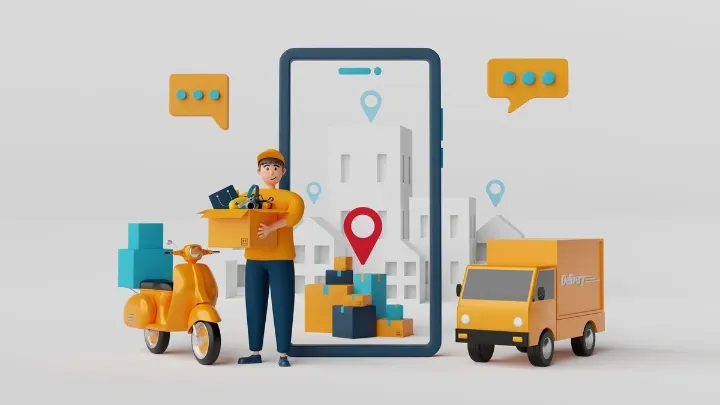
Gated communities, office buildings, and warehouse receiving areas all have access requirements that drivers need before they arrive. Without the right codes, contact names, or instructions, a driver cannot complete the stop regardless of timing.
Collecting access notes against each delivery address and surfacing them in the driver's app means this information travels with the route rather than sitting in a spreadsheet back at the depot.
How to Automate Out for Delivery Notifications
Customer notification is the highest-return action most delivery operations can take to lift their first-attempt delivery rate. The logic is direct: a customer who knows their order will arrive between 2pm and 3pm today will make arrangements to be available. A customer who receives no message will not.
SMS is the right channel for time-sensitive delivery updates. Text messages carry a 98% open rate compared to email's 20%, and 90% of SMS messages are read within three minutes of receipt. For last-minute delivery alerts, that responsiveness matters.
A well-structured out for delivery notification flow has three components:
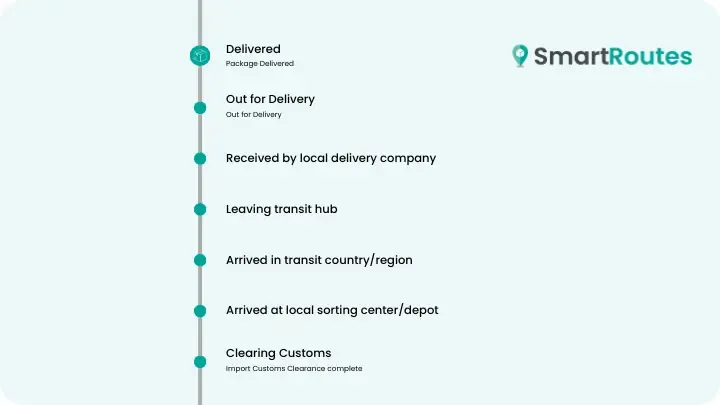
1. Dispatch notification: Sent when the driver scans the parcel onto the vehicle in the morning. This tells the customer their order is out for delivery and gives them a tracking link showing the driver's current position and estimated arrival time.
2. ETA alert: Sent automatically when the driver is a set number of stops or minutes away. A 30-minute alert gives the customer enough time to return home, move their car, or arrange a neighbor to accept the order.
3. Proof of delivery confirmation: Sent once the driver completes the stop with a photo, signature, or barcode scan. This closes the communication loop and removes the need for "where is my parcel?" calls.
Case Study: How Musgrave Built a Reliable Out for Delivery Process
Musgrave, one of Ireland's leading food retailers, needed to get out for delivery right on every route. Delivering perishable groceries means a missed stop is not just a logistics problem but a direct cost, since the goods often cannot be safely redelivered the following day.
After implementing SmartRoutes, they:
- Automated dispatch notifications so customers knew their order was out for delivery the moment it was scanned onto the vehicle
- Sent 30-minute ETA alerts to reduce missed handoffs
- Gave drivers a structured app workflow that collected proof of delivery at every stop
The result was a material reduction in customer support contacts and a higher rate of first-attempt completions across their routes. Drivers had cleaner routes, customers had accurate ETAs, and the operations team had live visibility of where every order was at any point in the day.
Final Thoughts
For last mile operators, the out for delivery stage is where every weakness in your process shows up. A single failed stop does not just add one more task to tomorrow's routes. It introduces extra mileage, depot handling, support contacts, and the risk that the customer never orders again. Getting this stage under control is one of the most reliable ways to protect margin and retention at the same time.
Clean address data, clear access instructions, automated notifications, and realistic, optimized routes remove the most common reasons deliveries fail after leaving the depot. Add proof of delivery on top and you have a closed loop where every stop is visible from planning through to completion.
Investing in tools that tie these pieces together becomes a practical way to run more drops on the same fleet with fewer failures. If you want to see how this looks in practice, SmartRoutes brings route planning, customer notifications, live tracking, and proof of delivery into a single platform built for last mile teams, try it for free for the next 7 days.
FAQ
1. Why do so many deliveries fail after they are marked out for delivery?
Most failures at this stage come from a small set of issues. Address data is incomplete or incorrect, customers do not receive or act on notifications, routes are overloaded so drivers arrive outside agreed windows, or the driver cannot access the property. The out for delivery status simply means the parcel has left the depot. Whether it gets completed on the first attempt depends on how well these basics are handled before and during the run.
2. Which changes give the fastest lift in first-attempt delivery rate?
The quickest gains usually come from three moves. Validate address data before orders reach the route plan, send automated dispatch and ETA notifications with a live tracking link, and move from manual planning to optimized routes. Together, these steps make it easier for drivers to find each stop, arrive on time, and meet customers who are expecting them, which lifts first-attempt delivery rate without adding more vehicles to the fleet.
3. How much does a failed delivery really cost a last mile operation?
The direct cost includes extra mileage, driver time, depot handling, and customer support. In many markets this averages more than ten dollars or pounds per failed parcel. On top of that, failed deliveries damage customer trust. A single poor experience can be enough for a buyer to switch provider, which makes the total impact much higher than the visible operational cost on the day of the failure.
4. What does a strong out for delivery notification flow look like?
A practical flow has three steps. First, a dispatch alert when the parcel is loaded, with a link to live tracking. Second, an ETA alert when the driver is around 30 minutes away so the customer can plan to be there. Third, a completion message with proof of delivery attached when the stop is closed. Running this flow through SMS and email from a delivery platform keeps customers informed without adding manual work for dispatchers.
5. Which KPIs should I monitor to understand out for delivery performance?
The core metrics are first-attempt delivery rate, on-time delivery rate, and cost per failed delivery. Many teams also track customer contacts per 100 deliveries to measure how often orders generate “where is my order” queries. Watching these together shows whether the main issues relate to planning, communication, or address quality and helps you decide where to focus improvement work.
If you enjoyed this blog, you might also be interested in:
 Michael Santry
 Caroline Hassett