
Quick Summary
- Last mile delivery software keeps the final stage of delivery organized, bringing route planning, driver tracking, proof of delivery, and customer updates into one place.
- The last mile is both the most expensive and most visible part of the delivery chain, so even small improvements in efficiency and communication can have a big impact on profit and customer loyalty.
- The features that make the biggest difference are smart route optimization, real-time tracking, reliable proof of delivery, automated notifications, and clear analytics on cost per delivery and on-time performance.
- The right tool depends on your operation: smaller teams usually benefit from simpler, low-cost planners, while growing delivery fleets need fuller last mile delivery management software with stronger tracking and integrations.
Choosing last mile delivery software can feel overwhelming, but understanding what it actually does makes the decision much easier.
Last mile delivery software is the technology that manages the final and most critical leg of a delivery: everything that happens after a package leaves the warehouse until it reaches the customer's door.
The last mile is also the most expensive and most visible part of the entire delivery chain.
A missed delivery window, a driver who can't find the address, or a customer left guessing when their order will arrive all shape how someone feels about a brand.
The right last mile platform brings route planning, driver tracking, proof of delivery, and customer notifications into one system, replacing spreadsheets, phone calls, and manual dispatching with something dispatchers and drivers can actually rely on day to day.
This guide breaks down what to look for in last mile delivery software, the features that matter most for delivery performance and customer experience, and how 12 of the leading platforms compare so you can find the right fit for your fleet.
What is Last Mile Delivery Software?
Last mile delivery software is a digital platform that helps businesses plan, manage, and track the final stage of the delivery process. This is the point where a package moves from a warehouse, depot, or store to the customer's doorstep.
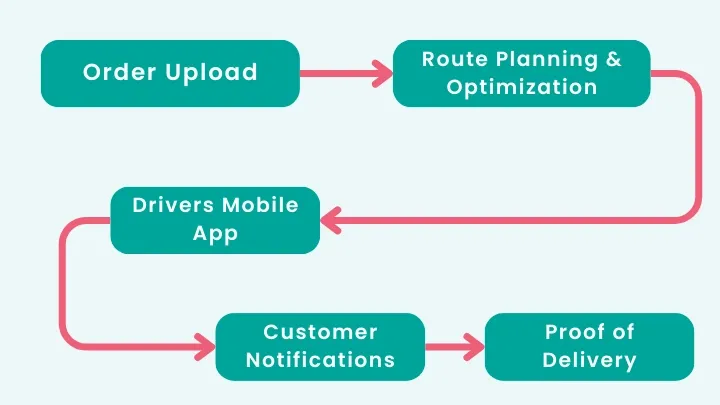
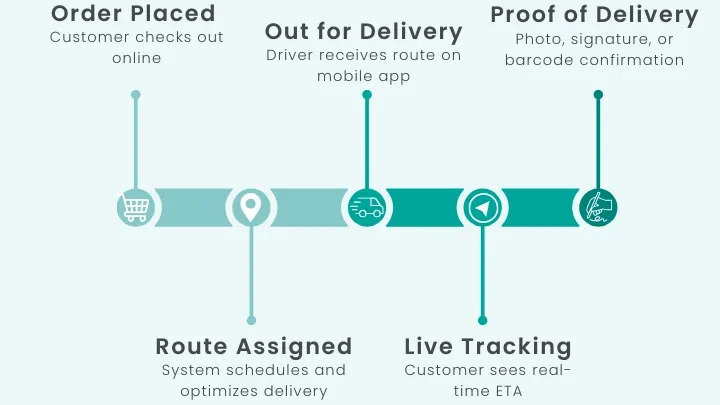
It covers the operational work that happens once an order is ready to ship: assigning stops to drivers, building optimized routes, tracking vehicles in real time, capturing proof of delivery, and keeping customers updated throughout.
Rather than juggling spreadsheets, phone calls, and manual dispatch boards, businesses get a single system where dispatchers have a live overview of the entire fleet and drivers get a mobile app with turn by turn routes and stop details.
At its core, this type of software brings together four functions:
- Route optimization to reduce drive time and fuel costs
- Real-time tracking so dispatchers and customers always know where a delivery stands
- Proof of delivery to confirm and document completed drops
- Automated communication that keeps customers informed without generating extra calls to a support team
Why Last Mile Delivery Matters
The last mile is the shortest leg of the delivery journey, but it is also the most expensive and the most exposed to customer scrutiny.
Last mile delivery accounts for 53% of total shipping costs, making it the single largest expense in most delivery operations.
That share keeps climbing as customer expectations for speed and precise delivery windows increase, putting pressure on businesses to run routes more efficiently rather than simply adding more vehicles and drivers.
Failed delivery attempts are an added cost burden for businesses. And often they come down to preventable issues like bad address data, missed time windows, or a driver unable to reach a customer.
A late delivery, a vague delivery window, or a lack of communication during transit shapes how a customer feels about a brand, regardless of how well the rest of the order was handled.
Roughly 84% of consumers say they will not shop with a retailer again after a poor delivery experience, which makes the last mile a retention issue as much as an operations one.
This is why last mile delivery software has become a priority investment rather than a nice to have!
Key Features of Last Mile Delivery Management Software
Choosing the right last mile delivery software can feel overwhelming, especially when balancing delivery volumes, fleet size, and day to day operational demands.
Focusing on the features below helps narrow the decision down to what actually affects delivery performance, cost, and customer satisfaction.
Route Optimization
Route optimization is a core component of last mile logistics software.
The right software should handle multiple depots, different vehicle capacities, and delivery time windows, while adjusting routes dynamically as traffic and last-minute changes come in.
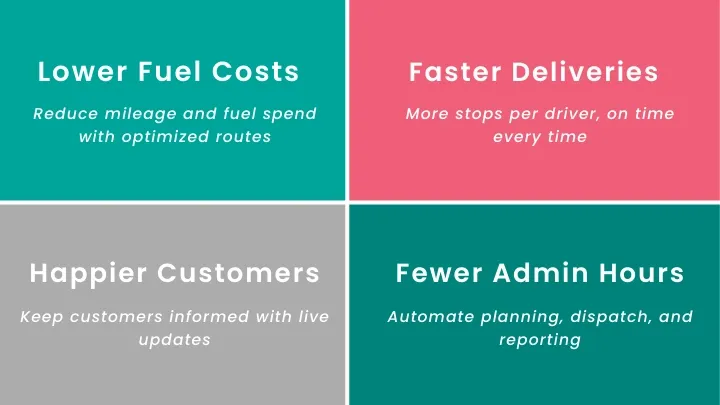
Done well, this translates directly into fewer miles driven, lower fuel costs, and more stops completed per shift. AI-powered route optimization takes this further by learning from historical delivery data to plan more efficient routes over time, rather than just solving each day's routes from scratch.
SmartRoutes Route Planning Software
Streamline your entire delivery process, all from one platform

Real-Time Tracking
Last mile delivery tracking software, and it serves two audiences at once.
Dispatchers get a live map of where every vehicle is and how each route is progressing, while customers get accurate ETAs and delivery updates without needing to call in.
That visibility does more than reassure customers. It cuts down on inbound delivery inquiries and lets dispatchers catch a delay or a missed stop before it becomes a customer complaint.
Proof of Delivery
A strong proof of delivery feature protects a business as much as it informs the customer.
Look for platforms that capture electronic signatures, photos, and barcode scans at the point of delivery, and that sync this data straight into your warehouse management system, ERP, or CRM.
Beyond confirming a delivery happened, this creates a clear audit trail that reduces disputes and chargebacks, which matters most for businesses shipping high-value or time-sensitive goods.
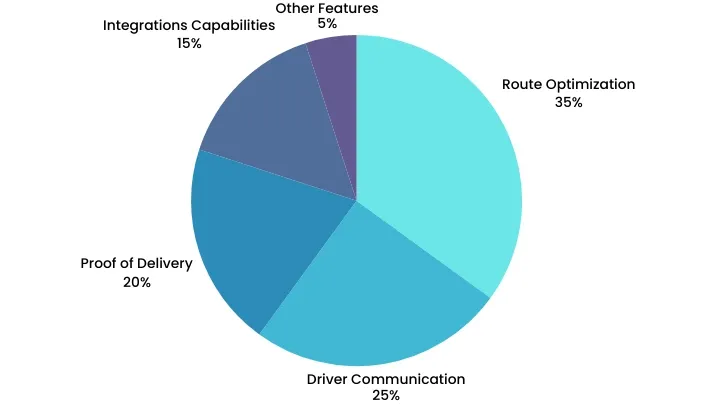
Driver App
The driver app is where all of the above actually gets used, so it needs to work well in the field, not just look good in a demo.
A good app is intuitive, works offline when signal drops, and lets drivers update statuses, follow optimized routes, and capture proof of delivery from a single screen.
A driver app that's difficult to use slows every other feature down. Poor adoption in the field leads to missed updates, inaccurate tracking data, and more errors, regardless of how capable the underlying routing engine is.
Analytics and Reporting
Analytics turns day to day delivery activity into decisions.
The best platforms provide dashboards covering cost per delivery, on-time performance, failed delivery rates, and driver productivity, so managers can spot problems and measure improvement over time rather than relying on gut feel.
For businesses evaluating software as an investment, this is often the feature that justifies the spend. Being able to show a measurable drop in cost per delivery or failed delivery rate makes the ROI case far easier than any feature list alone.
Scalability and Integrations
Last mile delivery software should be able to grow with a business rather than get replaced every time order volume increases.
Part of that scalability comes from integrations: connecting to eCommerce platforms, warehouse management systems, and CRMs so data flows automatically instead of requiring manual entry.
API access matters here too, since it lets businesses build custom workflows around their existing tools rather than reshaping their operations around the software.
12 Best Last Mile Delivery Software
Whether you’re a small startup just getting started with route optimization software or a large enterprise managing hundreds of deliveries per day, these reviews will help you evaluate the leading last mile delivery software companies
1. SmartRoutes
Best for: Mid-sized and large delivery businesses that want route optimization, tracking, and proof of delivery in one platform without juggling separate tools.
SmartRoutes stands out for how tightly it connects the dispatcher, driver, and customer experience into a single workflow.
What differentiates SmartRoutes most is its integration flexibility. It connects easily with existing eCommerce platforms and CRMs, which means businesses running on tools they already rely on can adopt SmartRoutes without ripping out their existing stack.
For teams managing a delivery fleet day in and day out, that combination of an easy-to-read dispatcher dashboard and a driver app that just works tends to matter more than any single standout feature.
Packages start at $29 per vehicle per month, with a 7 day free trial available for businesses that want to test it before committing.
2. RouteXL
Best for: Small or new businesses that want a free or very low-cost way to optimize routes without needing tracking or proof of delivery.
RouteXL keeps things deliberately simple. It skips the tracking, notifications, and proof of delivery features that most other platforms on this list build in, and focuses entirely on solving one problem well: calculating an efficient multi-stop route.
That narrow focus is actually its main selling point. A business with a handful of vehicles and no need for customer-facing tracking links can use RouteXL's free tier for up to 20 stops per route, or pay just $5 a day for unlimited stops, without paying for a full delivery management suite they won't use.
The tradeoff is that RouteXL isn't built to grow with a business. Once real-time tracking, proof of delivery, or multi-driver dispatching become priorities, most businesses outgrow it and move to a fuller platform.
3. Spoke (formerly Circuit)
Best for: Couriers and small delivery teams that care most about a fast, reliable mobile app for drivers.
Spoke built its reputation on the driver experience rather than the dispatcher dashboard. The mobile app is intuitive enough that couriers often prefer it over apps provided by their own logistics companies, and it keeps working offline in areas with weak signal, which matters for drivers covering rural or low-coverage routes.
The desktop side, Spoke Dispatch, is noticeably lighter on customization than platforms built around fleet management first. That tradeoff makes sense given who Spoke is built for: individual couriers and small teams who need their drivers moving efficiently more than they need deep dispatcher-side controls.
Plans start at $100 a month for up to 500 stops, scaling to $200 a month for 1,000 stops, which puts Spoke in a similar price range to other small-team platforms on this list, just with a stronger mobile-first tradeoff.
4. RoadWarrior
Best for: US-based small businesses and owner-drivers who want a dependable, courier-focused route planner.
RoadWarrior earned its reputation the hard way, by being adopted directly by drivers rather than pushed down from management.
It's become popular enough among professional couriers that drivers from companies like Amazon and UPS have chosen it over their employer's in-house tools, which says a lot about how reliable the app is in daily use.
Its standout feature is manifest upload support for FedEx and OnTrac, letting couriers import existing delivery manifests directly rather than manually entering stops.
That makes RoadWarrior a strong fit specifically for US courier operations already working within those carrier networks, more so than for general last mile delivery businesses without that carrier overlap.
Pricing is based on the number of vehicles and deliveries rather than a flat rate, so cost scales with fleet size instead of following a fixed tier structure.
5. Onfleet
Best for: Mid to large delivery operations that need mature last mile delivery management with strong tracking, notifications, and analytics.
Onfleet is built for high volume teams that care about both operational control and customer experience.
It combines a dispatcher dashboard, a dedicated driver app, and polished customer notifications into one platform, which is why it often appears on shortlists for retailers, grocery delivery, and courier operations handling thousands of tasks per month.
What sets Onfleet apart is the depth of its real time tracking and communication features. Dispatchers can see driver locations and task status on a live map, drivers use a modern mobile app with in app messaging and proof of delivery tools, and customers receive branded tracking pages and SMS or email updates with accurate ETAs.
Barcode scanning, ID verification, and detailed analytics are available on higher tiers, making it a strong fit for businesses with more complex compliance or reporting needs.
The tradeoff is cost. Onfleet’s Launch plan starts at $619 per month for roughly 2,500 delivery or pickup tasks. This pricing works well for established fleets with consistent high volumes, but is usually too expensive for small teams that are just starting to structure their last mile operations.
6. Routific
Best for: Small and mid sized local delivery teams that want clean, efficient routes and a simple workflow rather than deep enterprise features.
Routific focuses on making daily route planning simpler for growing delivery businesses. Its main strength is fast, clean route optimization that accounts for time windows, vehicle capacity, and service times, without overwhelming dispatchers with configuration options.
The interface is designed for quick setup, which is why it is popular with food and beverage deliveries and other local routes that repeat day after day.
Compared to heavier platforms, Routific leans into ease of use and transparent pricing. It offers a free tier for low volumes, then moves to flat order based pricing that can be cost effective for small fleets with high stop counts.
The main limitations are around live tracking depth and integration breadth. Some competing tools offer more advanced real time tracking, barcode workflows, and API integrations for complex environments, so teams that grow into multi depot, multi region operations often treat Routific as a first step and move on to more feature rich platforms later.
How to Choose the Right Last Mile Delivery Software for Your Business
Choosing the right last mile delivery software starts with understanding your own operation, from how many vehicles you run on a busy day to how often routes change once drivers are on the road, then matching that reality to platforms that provide strong route optimization, real-time tracking, customer notifications, and proof of delivery without hiding essentials behind add-ons.
The tools in this guide all support last mile deliveries, but they differ in how they price, which features they include at each tier, and how well they integrate with the systems you already use, such as your eCommerce platform, warehouse software, or CRM.
The best fit is usually the one that your drivers and dispatchers find easy to use every day and that offers predictable costs as your delivery volume grows, rather than the lowest headline price.
SmartRoutes offers a 7 day free trial with full access to core delivery management features, so you can sign up in a few minutes, import your orders, build optimized routes, and see how it performs on your own last mile deliveries before committing long term.
Frequently Asked Questions about Last Mile Delivery Software
1. What is last mile delivery software?
Last mile delivery software is a digital platform that manages the final stage of delivery, from a depot or warehouse to the customer's door. It combines route optimization, real-time driver tracking, customer notifications, and electronic proof of delivery in one system, usually through a dispatcher dashboard and a mobile driver app.
2. What is the difference between last mile delivery software and last mile delivery tracking software?
Last mile delivery software usually covers the full workflow, including route planning, driver dispatch, proof of delivery, customer notifications, and reporting. Last mile delivery tracking software is a narrower term that focuses on visibility, showing where drivers or orders are in real time. Most modern delivery management platforms include tracking as one part of a broader feature set.
3. What features should I look for in last mile delivery management software?
The core features to prioritize are route optimization, real-time tracking, proof of delivery, and automated customer notifications. Integrations with your existing tools, such as eCommerce platforms, warehouse systems, or CRMs, are important if you want data to flow automatically. A driver-friendly mobile app and clear analytics on cost per delivery and on-time performance help ensure the software actually improves day to day operations.
4. How does last mile delivery management software reduce failed deliveries?
It reduces failures in two main ways. Before delivery, automated SMS and email notifications give customers accurate ETAs and options to reschedule, which lowers the chance that no one is home or that an address issue goes unnoticed. During delivery, real-time tracking links let customers follow the driver's progress and prepare for arrival. Together, these features typically reduce first-attempt failure rates and cut re-delivery costs.
5. Is there last mile delivery software for eCommerce businesses?
Yes. eCommerce retailers that run their own delivery fleet can use platforms like SmartRoutes, which connect directly with platforms such as Shopify and WooCommerce to import orders and build optimized routes automatically. Retailers that rely on third-party carriers can use carrier management tools to integrate with multiple delivery partners and handle label generation, tracking, and carrier selection from one place.
6. How much does last mile delivery software cost?
Pricing varies by fleet size, delivery volume, and feature set. Entry-level platforms for small teams start from around $29 per vehicle per month. Mid-market options often range from about $49 to $150 per vehicle per month, while enterprise platforms built for high-volume operations can start from $500 or more per month. Most providers offer a free trial so you can test the fit before committing.
If you enjoyed this blog, you might also be interested in:
 Caroline Hassett