
Quick Summary
- The right phone for a delivery driver needs strong battery life, reliable GPS, at least 6GB of RAM, and guaranteed compatibility with your delivery apps.
- Rugged phones like the Blackview BV9300 Pro give multi-day battery life and military-grade drop protection at a much lower price than flagship iPhones.
- Samsung Galaxy XCover7 Pro is the best mid-range rugged option for fleets, with a removable battery, Samsung Knox security, and long-term enterprise support.
- Google Pixel 9a is the top non-rugged Android pick for 2026, with a 5,100 mAh battery, Tensor G4 chip, and seven years of OS and security updates.
- Apple iPhone 16 is the best choice for iOS users, but most drivers will need an in-vehicle charger to comfortably get through a full delivery shift.
The delivery van used to be the most important tool a driver had. That is still largely true, but the smartphone now runs a very close second.
Where drivers once relied on printed manifests and phone calls to dispatchers, they now scan parcels at the depot, navigate multi-stop routes, capture proof of delivery at the doorstep, and receive live updates on schedule changes, all from a single device in their pocket.
Delivery management depends on that phone working hard all day. It needs the battery life to stay on, the performance to keep delivery apps responsive, and the durability to survive constant use in and out of the vehicle.
This guide is for two types of reader: delivery business owners researching what phones to buy for their drivers, and individual drivers on a bring-your-own-device (BYOD) policy who want to invest in a phone that will hold up through a working day without failing them mid-route.
We will cover the six features that matter most and then share our top picks for 2026 at four different price points.
Why the Right Phone Matters for Delivery Drivers
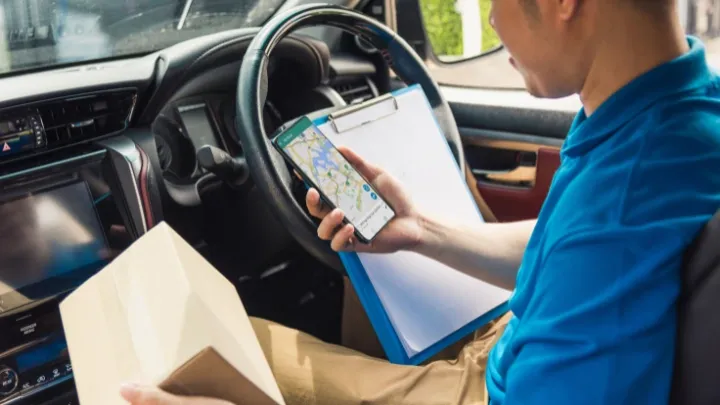
For multi-drop drivers completing up to 200 parcels a day, the smartphone handles navigation, parcel scanning, customer communication, and proof of delivery capture. That workload is demanding, and not every phone is up to it.
One common temptation, especially when buying phones for a fleet, is to go with the cheapest option available. The problem is that an underpowered phone costs time every day: slow route optimization, laggy scanning, missed turn prompts, and battery failures mid-route all add up across hundreds of working days. A phone that fails halfway through a shift is not a cheap phone. It is an expensive problem.
We have broken the decision down into six features that give you a clear framework for any phone you are considering.
SmartRoutes Route Planning Software
Streamline your entire delivery process, all from one platform

6 Features to Look for in a Delivery Driver Phone
1. Compatibility
First, check that the phone you are about to buy will be compatible with the courier app you intend to use it with. For example, the Amazon Flex Android app will require your phone to have:
- Version Android 7.0 or newer
- At least 2GB of RAM memory (more on this later)
- A camera with flash
- GPS Location Services
While most recent smartphones will be fine with these specs, some older phones cannot update to the latest version of Android or iOS.
Our advice: If you plan on buying an older model or refurbished device to save on costs, confirm that it can run the specific delivery app that you or your company uses.
2. Battery Life
Delivery apps use a lot of battery, and in most cases they will be the most demanding apps on your phone.
Why?
Well, it’s a result of 2 factors; the features of the phone that they draw upon, and the sheer amount of time they will be in use over the course of a working day.
On the first point, features like GPS (used in routing and navigation) and the camera (scanning and proof-of-delivery) will drain a battery faster than anything else on your phone, and these are central to most delivery apps.

Run out of battery halfway through a delivery route and you lose navigation, parcel scanning, and proof-of-delivery capture for the rest of the shift.
Our advice: While manufacturers offer their own guides in ‘hours’, we advise making sure that you do your own research on the size of the battery within the phone. Ideally, you should have a lithium-ion battery with at least 4,614 mAh (although for routes of 200 stops and using route navigation we advise closer to 10,000 mAh.)
3. Memory Size (RAM)
Memory size is more important than it first appears when choosing a phone for a driver.
A simple way to think about memory in a smartphone is as its ability to handle several tasks at once.
The biggest differentiator when it comes to the cheapest smartphones and the most expensive, is usually what we refer to as Memory or RAM. In simple terms, the better the memory in a phone the more fast, reliable and easy it will be to use.
Some tasks like route optimization within delivery apps can take quite a bit of computing power, and you’re not going to want to spend all day waiting for your phone to calculate the quickest route.
If you’ve ever used a delivery driver app on a phone and found it slow and frustrating, it is quite likely that the phones ‘memory’ just wasn’t up to the task.
Random app crashing, scanning taking ages, and (worst of all in our opinion!) only telling you about a stop a few seconds after you’ve passed it are all tell-tale signs that its memory/RAM is not up to the job.
Our advice: When you compare options, look for a phone with at least 6GB of RAM and avoid very low-spec handsets.
4. Durability
The reality of doing deliveries is that it is demanding work on both drivers and devices.
Similar to your delivery vehicle, the build-quality and durability are going to be key to ensuring that your phone is up to the task.
Even the most expensive phones on the market can perform poorly on durability, so it is important to know which models can handle daily delivery work.
In the past, there was a trade-off between rugged phones that were durable but slow, and more desirable phones that were fast to use but did not stand up to a delivery driver’s day-to-day work.
As technology has improved and the field has become more even across manufacturers, rugged phones can now be as advanced and smooth to operate as flagship iPhones and Samsungs.
Our advice: Do not assume that a higher price always means better durability. The most expensive brands, including Samsung and Apple, are not always built to withstand the daily wear and tear of a courier driver’s work.
5. Screen Size
Since smartphones became widely used, they have steadily increased in size. This has been driven partly by demand and partly by the need for more physical space to fit newer components inside the phone’s casing.
Most of us are now used to larger screens, and this is a clear advantage for delivery drivers, who need to see information quickly and tap the right buttons without distraction.
Although we don’t have it higher on this prioritized list, screen sizes can be a bit of a tricky one as many of the better-known brands like Apple reduce the screen size in their cheaper phones like the iPhone mini.
It can help to visit a store and try a few phones in person to see which screen size feels comfortable in your hand.
Our advice: We recommend looking for a phone with at least a 6-inch screen to make following routes, checking order details and collecting sign-on-screen signatures as easy as possible while on the job.
6. Camera
Yes, the camera is important, but maybe not as much as you think!
Again, this is one of the key pieces of technology that manufacturers have focussed on in recent years as they sought to maintain an edge over their competitors. The result is that the camera in phones has increasingly become the main differentiator between ‘budget’ and ‘flagship’ phones.
The good news?
That means that even the cheapest phones on the market have fantastic cameras that will be more than up to the task of scanning barcodes and QR codes, and capturing clear photos for proof of delivery.
Our advice: Do not get caught up in complicated camera metrics. Make sure the phone has a flash and you will be covered for barcode scanning and proof-of-delivery photos with any mid-range phone released in the past two to three years.
4 of the Best Phones for Delivery Drivers in 2026
With those six criteria in mind, here are our top picks across four categories. We have deliberately avoided the very top end of the market. A $1,300 Samsung Galaxy S25 Ultra is a fine phone, but it is not a sensible purchase for a delivery driver. All four options below offer genuine value at their price point.
| Phone | Battery | RAM | Screen | Durability | Camera | Price (approx.) |
|---|---|---|---|---|---|---|
| Blackview BV9300 Pro | 15,080 mAh | 12GB | 6.7" 120Hz | IP68/IP69K, MIL-STD-810H | 64MP | ~$350–400 |
| Samsung Galaxy XCover7 Pro | 4,350 mAh removable | 6–8GB | 6.6" 120Hz | IP68, MIL-STD-810H, 1.5m drop resistance | 50MP | $599.99 |
| Google Pixel 9a | 5,100 mAh | 8GB | 6.1" 120Hz pOLED | IP68/IP69 | 48MP | $499 / €459 |
| Apple iPhone 16 | 3,561 mAh | 8GB | 6.1" OLED | IP68 | 48MP | ~$799 |
1. Blackview BV9300 Pro (Top Pick)
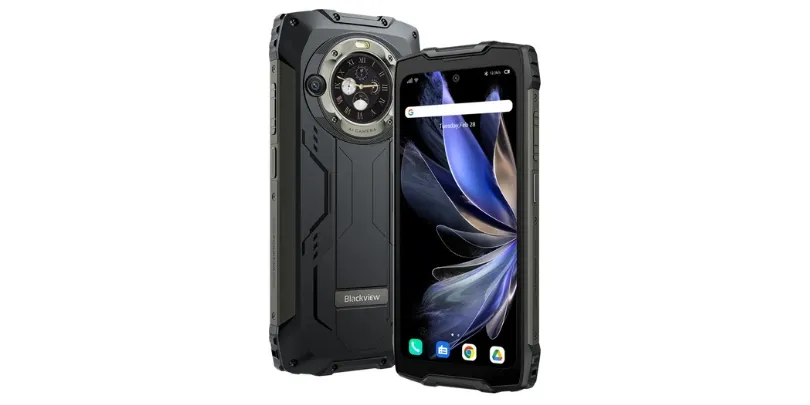
The BV9300 Pro is the direct successor to the BV9300 (featured previously in this blog), making it a great like-for-like swap. It retains the same enormous 15,080 mAh battery, 6.7-inch screen and 12GB of RAM, while upgrading the rear camera from 50MP to 64MP and adding a 1.3-inch secondary display for quick access to compass and notifications. The phone carries IP68/IP69K and MIL-STD-810H certification, making it one of the most drop-resistant devices in this price range.
Key specs:
- Battery: 15,080 mAh (up to 76-day standby)
- RAM: 12GB (expandable to 21GB)
- Screen: 6.7 inches, 120Hz IPS LCD
- Camera: 64MP rear, 32MP front
- Durability: IP68/IP69K, MIL-STD-810H, Gorilla Glass 5
- OS: Android 13
- Price: ~$350–400
Best for high-volume couriers doing 100+ drops per day who need a phone that will last a full shift without charging.
2. Samsung Galaxy XCover7 Pro (Best Mid-Range Rugged)
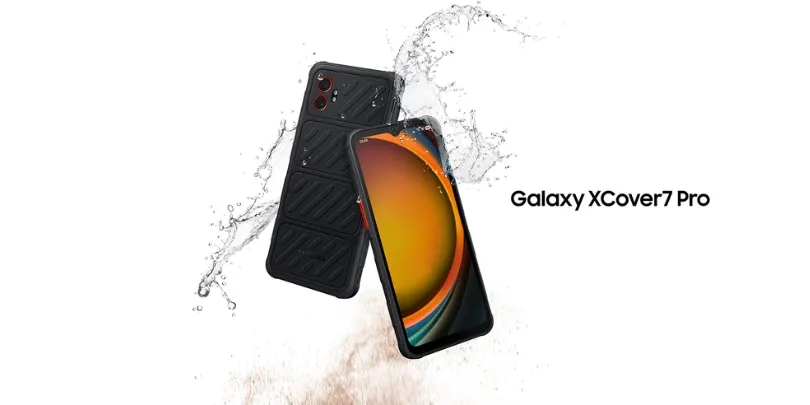
Released in ay 2025, the XCover7 Pro is Samsung's latest enterprise-grade rugged phone. It brings IP68 rating, MIL-STD-810H certification, and a removable 4,350 mAh battery, one of the few smartphones at this price point where the battery can be swapped out on the go. At 240g, it is dramatically lighter than the Blackview options, which makes it more comfortable for drivers who handle the phone constantly throughout the day. Samsung's enterprise support ecosystem (Knox security, guaranteed Android updates to Android 16, Samsung DeX) makes this a strong option for fleet owners purchasing phones in bulk.
Key specs:
- Battery: 4,350 mAh, removable, 15W fast charging
- RAM: 6GB (128GB) or 8GB (256GB)
- Screen: 6.6 inches, 120Hz, Gorilla Glass Victus+
- Chipset: Snapdragon 7s Gen 3 (4nm)
- Camera: 50MP main, 8MP ultrawide
- Durability: IP68, MIL-STD-810H, drop resistant to 1.5m
- OS: Android 15, upgradable to Android 16
- Price: ~$599.99
Best for the best balance of ruggedness and mainstream brand support. The removable battery is a standout feature for delivery businesses, drivers can carry a spare and swap mid-route rather than needing to charge.
3. Google Pixel 9a (Best Mid-Range Android)
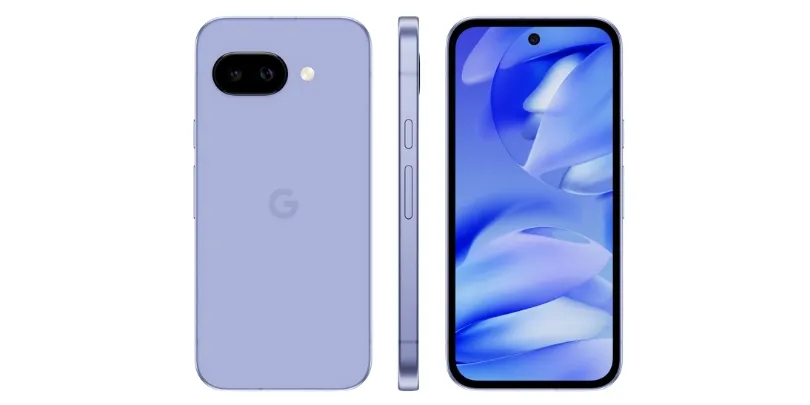
The Pixel 9a launched in 2025 as the budget entry point into Google's Pixel 9 series, priced at $499. It represents a substantial leap over previous models, with a 5,100 mAh battery (the largest ever in a Pixel phone), the Google Tensor G4 chip, and 8GB of RAM. Google guarantees seven years of OS and security updates, which means a fleet owner buying these phones in 2026 can expect support through 2032, strong value for a business device. Battery tests show close to two full days of mixed use on a single charge.
The Pixel 9a does not have the rugged build of the Blackview or XCover7 Pro options; it carries IP68 and IP69 ratings but no MIL-STD-810H certification. For drivers who are more careful with their devices or who use a protective case, it offers excellent performance at a price point well below Samsung's flagship rugged options.
Key specs:
- Battery: 5,100 mAh, 23W wired charging, Qi wireless charging
- RAM: 8GB
- Screen: 6.1 inches, 120Hz pOLED, 2,700 nits peak
- Chipset: Google Tensor G4
- Camera: 48MP wide, 13MP ultrawide
- Durability: IP68/IP69
- OS: Android 15, 7 years of updates guaranteed
- Price: $499
Best non-rugged Android option for drivers who prioritize software reliability and long-term value.
4. Apple iPhone 16 (Best for iOS Users)
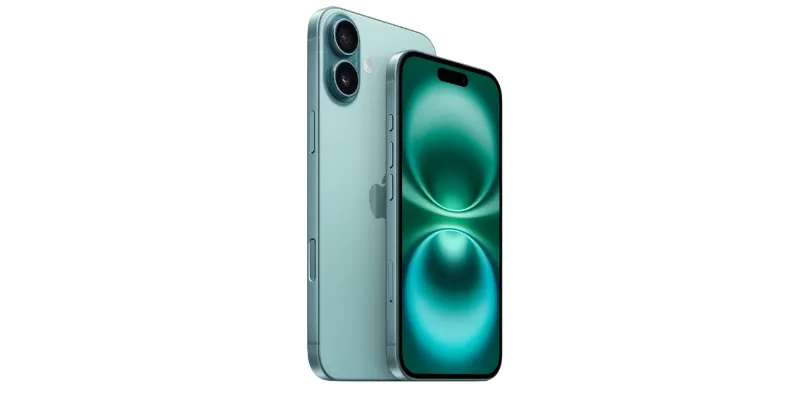
For drivers already in the Apple ecosystem, the iPhone 16 is the current recommended entry point for 2026. It runs on the A18 chip, supports iOS 18, and comes with USB-C charging, a practical upgrade from the Lightning connector on previous models. Apple continues to offer among the strongest app stability and security of any smartphone platform, and iOS delivery apps like Amazon Flex and DoorDash run smoothly on current iPhone hardware.
The battery (3,561 mAh) remains the weakest point of the lineup when compared to Android alternatives at similar or lower price points. Drivers doing full-day routes of 150+ stops will likely need a car charger or battery case. At ~$799 starting price, it is also the most expensive option in this guide.
Key specs:
- Battery: 3,561 mAh, 20W fast charging, MagSafe wireless
- RAM: 8GB
- Screen: 6.1 inches, Super Retina XDR OLED
- Chipset: A18
- Camera: 48MP main, 12MP ultrawide
- OS: iOS 18, long-term Apple support
- Price: ~$799
Best for iOS users. The USB-C upgrade is a practical improvement for drivers who already carry USB-C cables in their vehicle.
Your Delivery App is as Important as the Phone it’s on, and That’s Where SmartRoutes Wins
The right phone gets you halfway there. The delivery app running on it does the rest.
Whether you are managing a small fleet or running routes yourself, a reliable, lightweight delivery app changes how much value you get from your handset, especially on lower-spec devices.
SmartRoutes is built for delivery operations, with route optimization, proof of delivery, customer notifications, and real-time driver tracking in a single platform. The driver app is designed to run smoothly on mid-range phones, so you do not have to buy the most expensive handset to get a good experience.
If you want to see how SmartRoutes performs on any of the phones in this guide, you can start a free trial and test it on your next delivery route.
FAQ
1. What features should I look for in a smartphone for delivery drivers?
Focus on battery life (4,600 mAh minimum, 10,000+ mAh for long routes), GPS accuracy, at least 6GB of RAM, and compatibility with your delivery app. Durability ratings (IP68 and MIL-STD-810H) matter if the phone will be used in tough conditions. Screen size of 6 inches or above makes navigation easier at a glance.
2. Android or iOS — which is better for delivery drivers?
Both platforms support major delivery apps including Amazon Flex, DoorDash, and DPD Saturn. Android offers more choice across price points and tends to have stronger rugged phone options. iOS is a strong choice for drivers already in the Apple ecosystem who want a consistent, familiar interface. The decision usually comes down to personal preference and what platform your existing team uses.
3. Are rugged phones worth it for delivery drivers?
Yes, for most delivery work. Rugged phones with MIL-STD-810H certification are built to withstand drops, vibration, dust, and rain — all of which are part of a normal delivery shift. At the price points available in 2026, you no longer have to trade performance for durability. A phone like the Blackview BV9300 Pro matches or beats mainstream flagship specs while surviving conditions that would crack a standard smartphone screen.
4. What are the best navigation apps for delivery drivers?
Google Maps and Waze are the most widely used free navigation apps and work well for simple routes. For drivers managing 20+ stops per day, a dedicated route optimization tool like SmartRoutes offers significant advantages over free navigation apps — including multi-stop optimization, proof of delivery, and real-time customer notifications that free tools do not support.
5. How do I extend battery life during a long delivery shift?
Lower screen brightness, close background apps, and activate battery saver mode when GPS is less critical. A car charger or charging mount in the vehicle is the most reliable solution for long routes — it keeps the phone topped up passively while driving between stops. For phones with removable batteries (like the Samsung Galaxy XCover7 Pro), carrying a spare charged battery removes the problem entirely.
If you enjoyed this blog, you might also be interested in:
 Michael Santry
 Caroline Hassett