
Quick Summary
- This guide reviews 5 of the best delivery logistics apps and route planner tools for businesses in 2026.
- Each app is explained with strengths, trade-offs, and the types of businesses it suits best, rather than a strict side-by-side comparison table.
- Choosing the right last mile delivery software or delivery logistics app depends on your delivery volume, pricing model preferences, integration needs, and budget.
Imagine this: it’s the morning of your busiest delivery day.
Drivers are waiting on instructions, your manager is scrambling with spreadsheets, customers are pinging “where’s my order?” messages…
Without a solid logistics delivery app, your operation can feel chaotic.
A delivery logistics app brings order to the moving parts of a delivery day. It helps teams plan routes, give drivers the information they need at each stop, follow route progress and confirm completed deliveries.
Whether you run a small local courier or a growing eCommerce business, this kind of software can reduce costs, improve customer experience, and make your team look more professional.
In this post, we’ll walk through what to look for, compare five top solutions, and help you pick the best fit for your last mile delivery logistics operations.
Features You Should Look for in a Delivery Logistics App
When comparing delivery logistics apps, focus on the tools that help your team plan routes, keep drivers moving and stay on top of deliveries in progress:
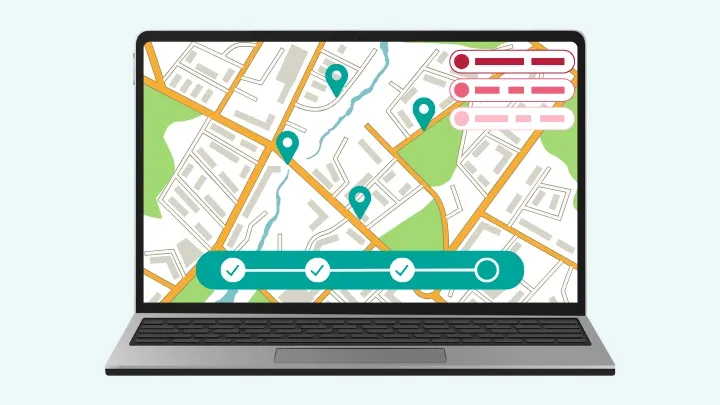
- Route optimization and route planning: intelligently sequence delivery routes, avoid backtracking and factor in time windows.
- Real-time tracking & visibility: monitor driver locations live and make adjustments on the fly.
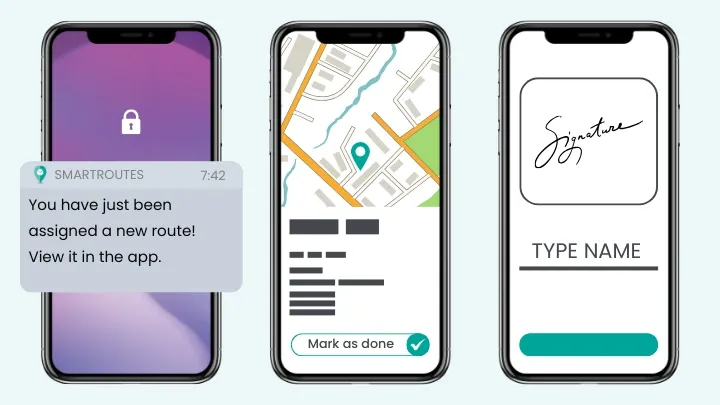
- Proof of delivery (POD): photo, signature, barcode, or e-signature capture.
- Driver mobile app: interface for drivers to see tasks, navigate, mark drop-offs.
- Customer notifications & tracking: SMS/email updates and tracking portal for customers.
- Easy data import and connectivity: Simple ways to upload delivery lists, bring in order details and connect to the systems your team already uses.
- Delivery progress visibility: A clear view of route status, completed stops and exceptions that may need attention during the day.
These features help reduce manual work, minimize errors, and create a smoother experience for drivers and customers alike.
Comparison: Top 5 Delivery Logistics Apps
Here we compare each app in more depth, covering strengths, trade-offs, and what kinds of businesses each suits best.
1. SmartRoutes
SmartRoutes is a delivery logistics app for businesses that need to plan routes, assign work to drivers, track delivery progress and collect proof of delivery in one place.
It’s especially strong for teams transitioning from spreadsheets or manual processes into structured delivery operations.
Whether you're handling last-mile drops, scheduled routes, or recurring deliveries, SmartRoutes keeps managers, drivers, and customers in sync from a single dashboard.
You can start from €29 per vehicle per month for the Basic plan, and scale to Essentials or Premium tiers.
Strengths
- Clear pricing per vehicle rather than task-based surprises
- Good balance of features: route optimization, proof of delivery, real-time tracking, and customer notifications
- Drivers can log vehicle checks and performance metrics
- Scalability without overly complex add-ons
Trade-offs/Considerations
- As with any app, the real-world performance depends on how well your data (addresses, time windows) is clean
Who’s it for?: SmartRoutes is ideal for businesses that want a reliable, transparent platform without surprises in pricing or hidden costs.
SmartRoutes Route Planning Software
Streamline your entire delivery process, all from one platform

2. Onfleet
Onfleet is a delivery logistics app for businesses handling high volumes of delivery tasks and multi-driver routes.
It’s widely adopted by courier networks, grocery brands, and subscription services thanks to its polished interface and automation capabilities.
If your operation relies on high-volume task assignment and coordinated multi-driver schedules, Onfleet gives dispatchers a clear view of route progress across every stop.
Starting at $599/month for 2,500 tasks, then $1,299 for 5,000 tasks, and enterprise pricing beyond that.
Strengths
- Excellent logistics dispatching tools and analytics
- Strong brand reputation, many integrations
- Branded customer tracking pages, clean UX
Trade-offs/Considerations
- The pricing is relatively steep for smaller operations
- The jump between tiers can force you to overpay for unused capacity
- Some users have reported route optimization issues, and limited flexibility when changes are needed mid-route
Who’s it for?: Onfleet is great for operations that already have a volume that justifies its cost and want a polished, scalable solution.
3. Routific
Routific is a logistics delivery solution focused on helping teams cut mileage and increase delivery efficiency without overcomplicating operations.
It’s ideal for small to mid-sized businesses looking for smart dynamic route planning and real-time visibility without committing to heavy enterprise contracts.
With a usage-based pricing option, it suits companies with fluctuating delivery volume or seasonal demand.
Strengths
- Very scalable and flexible pricing
- Strong algorithm for route optimization
- Includes real-time tracking and email notifications
Trade-offs/Considerations
- Some core features like SMS notifications, deep APIs, or advanced analytics may come at extra cost or only in higher tiers
- For very large fleets, per-vehicle or per-order models might scale higher than flat-tier competitors
Who’s it for?: Routific is well suited for businesses that have variable delivery volume and prefer paying in line with usage.

4. Spoke Dispatch( formerly Circuit for Teams)
Spoke Dispatch is a delivery logistics app for businesses that handle large numbers of daily drop-offs, from parcel delivery to service providers.
It offers streamlined route planning, driver tracking, and proof of delivery with minimal setup required.
Instead of overwhelming users with complex dashboards, Spoke prioritizes speed and usability, making it easy for drivers and teams to adopt quickly.
Spoke uses a per-stop pricing model.
Strengths
- Transparent pricing tied to actual volume (stops) instead of drivers
- Features included at lower tiers (route optimization, proof of delivery, tracking)
- Good flexibility for businesses that fluctuate in stop counts
Trade-offs / Considerations
- If your routes are heavy with many stops, the marginal cost can add up
- Not always optimal for operations that care more about per-driver than per-stop
Who’s it for?: Spoke is a strong choice for teams with many stops and varying daily route volume.
5. Tookan
Tookan caters to businesses that want to customize their delivery workflows with granular control over features and integrations.
Its modular approach allows teams to add capabilities like route optimization, ETA tracking, or customer notifications as needed. It’s often chosen by companies with unique delivery patterns or niche service requirements that don’t fit rigid software models.
Strengths
- Very modular; good for operations that want to pay for just the features they need
- Wide integration potential
Trade-offs / Considerations
- Because many essential features are add-ons, pricing can become unpredictable
- Some users report reliability or support challenges
Who’s it for?: Tookan is attractive for companies that want deep customization and have careful control of feature sets versus cost.
Start Using a Delivery Logistics App That Actually Simplifies Operations
Choosing a delivery logistics app is about finding the right fit for your routes, drivers and daily delivery workload.
If you run a small-to-medium operation, you’ll likely prefer an app with transparent per-vehicle pricing, essential features included, and room to scale without surprises. SmartRoutes fits that sweet spot.
Start small, test key features, and then scale up. Want to try before you commit? Sign up for SmartRoutes (free trial available) and see how it works in your delivery operations.
FAQs about Delivery Logistics Apps
1. What is a delivery logistics app?
A delivery logistics app helps businesses organise and complete deliveries more efficiently. It typically supports route planning, driver navigation, live delivery updates, and proof of delivery, so teams can manage the practical day-to-day work of getting orders from depot to customer.
2. How does route optimization help delivery operations?
Route optimization helps teams put stops in a more efficient order, reduce unnecessary driving, and plan around delivery windows. For day-to-day operations, this can mean more predictable routes, less backtracking, and more completed deliveries per driver.
3. What features should a logistics delivery app include?
Look for route planning, driver navigation, live route visibility, proof of delivery, and customer delivery updates. The right app should make it easier for dispatchers and drivers to manage active routes and respond when delivery plans change.
4. What's the difference between a delivery driver app and logistics software?
A delivery driver app is the mobile tool used by a driver to view stops, navigate, update delivery status, and capture proof of delivery. A delivery logistics app brings those driver workflows together with route planning and live route visibility for the team coordinating deliveries.
5. How can delivery logistics apps improve customer experience?
Delivery logistics apps can provide customers with delivery status updates, tracking links, and more accurate arrival expectations. This helps reduce uncertainty on delivery day and gives customers clearer information if a route is delayed or rescheduled.
If you enjoyed this blog, you might also be interested in:
 Caroline Hassett
 Caroline Hassett